


What's Happening?
Iran has implemented a new policy requiring ships to pay up to $2 million in Chinese yuan or cryptocurrencies to pass through the Strait of Hormuz. This move follows a bill approved by Iranian lawmakers, which mandates that tankers and cargo ships negotiate
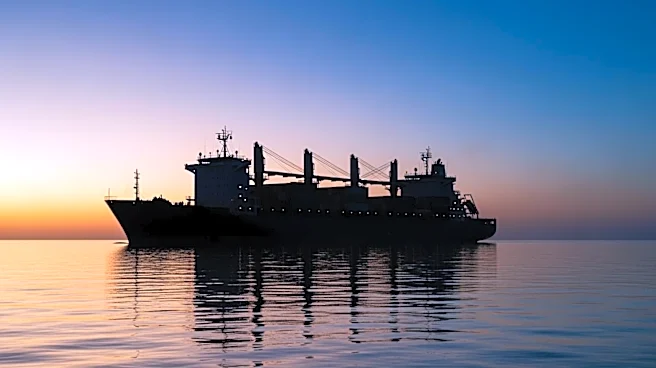
passage fees with a company linked to the Islamic Revolutionary Guard Corps (IRGC). Ships must provide detailed information about their ownership, flag, cargo, and crew, and transmit a secret code to the Iranian navy to ensure safe passage. This policy effectively gives Iran control over the Strait, a crucial trade route for 20% of the world's oil supply. Since the onset of a conflict involving the U.S. and Israel, Iran has restricted passage to ships it deems non-hostile, allowing only about 300 ships to pass since March.
Why It's Important?
The Strait of Hormuz is a vital chokepoint for global oil transportation, and Iran's new toll system could significantly impact international trade and energy markets. By demanding payments in yuan or cryptocurrencies, Iran is bypassing traditional financial systems, potentially undermining U.S. sanctions and dollar dominance. This development could strain relations between Iran and Western countries, particularly the U.S., which has historically maintained a military presence in the region to ensure free navigation. The policy may also lead to increased shipping costs and delays, affecting global oil prices and supply chains.
What's Next?
The international community, particularly countries reliant on oil passing through the Strait, may seek diplomatic or economic measures to counter Iran's toll system. The U.S. and its allies might increase naval patrols to ensure freedom of navigation, potentially escalating tensions in the region. Shipping companies will need to assess the financial and security risks of transiting the Strait, possibly rerouting to avoid the tolls. The situation could lead to further geopolitical negotiations or conflicts, depending on Iran's adherence to international maritime laws and the response from affected nations.