

What's Happening?
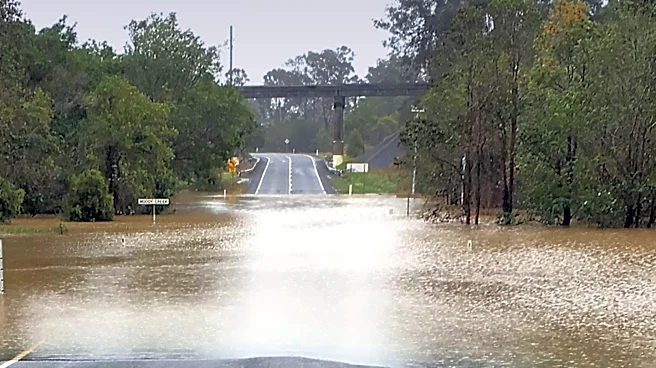
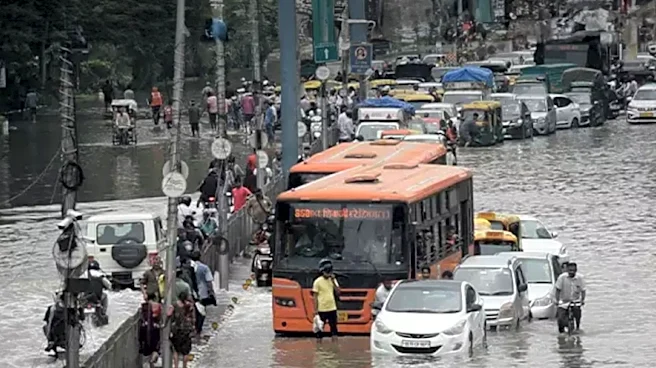
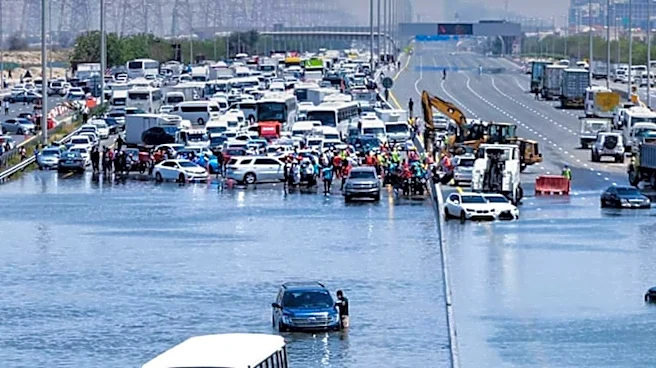
Homewood and Flossmoor, two communities in Illinois, experienced significant flooding on August 1, 2026, following a day of heavy rain. The rainfall, which exceeded four inches in 24 hours, overwhelmed local drainage systems, leading to numerous road
closures. Streets such as Bob O’ Link Road, Dartmouth Avenue, and others in Flossmoor, as well as several roads in Homewood, were reported flooded. The Flossmoor Road and Dixie Highway viaducts were also affected, with reports of vehicles stalled in the water. Parks in the area, which often serve as stormwater detention basins, were quickly filled, and Butterfield Creek overflowed its banks. The local village board has plans to raise the deck of the Dartmouth Avenue pedestrian bridge to prevent future flooding.
Why It's Important?
The flooding in Homewood and Flossmoor highlights the challenges faced by communities in managing extreme weather events, which are becoming more frequent due to climate change. The infrastructure in these areas, including drainage systems and bridges, is being tested by such events, necessitating upgrades and improvements. The flooding impacts local residents by disrupting daily life, damaging property, and potentially affecting local businesses. It underscores the need for investment in resilient infrastructure to mitigate the effects of severe weather and protect communities from future incidents.
What's Next?
In response to the flooding, local authorities may need to expedite infrastructure improvements, such as the planned elevation of the Dartmouth Avenue pedestrian bridge. Community leaders and residents will likely engage in discussions about further measures to enhance flood resilience, including potential upgrades to drainage systems and the construction of additional stormwater detention facilities. The situation may also prompt broader conversations about climate adaptation strategies at the municipal level.