







What's Happening?
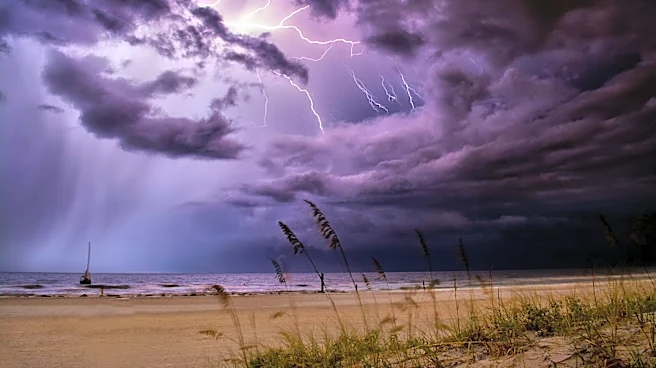
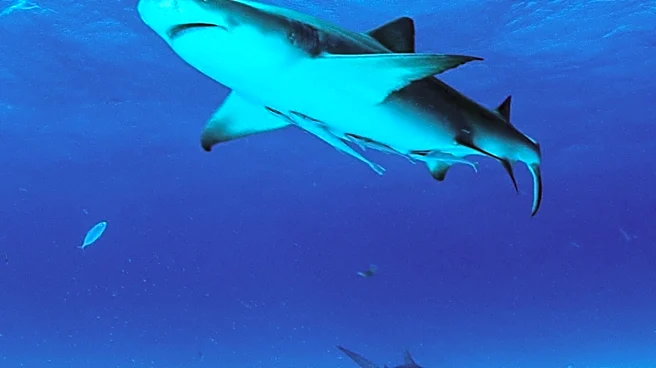
Sharks have been observed to flee their usual habitats in response to approaching hurricanes and tropical storms. This behavior is attributed to their ability to sense changes in barometric pressure, which drops as a storm approaches. A study conducted
by Dr. Bob Hueter and colleagues found that young blacktip sharks off Florida's Gulf Coast evacuated to deeper waters during Tropical Storm Gabrielle in 2001. The study suggests that this evacuation behavior is likely a survival mechanism triggered by the drop in atmospheric pressure, which sharks can detect through their inner ears. This behavior has been observed in other shark species as well, indicating it may be a common trait among coastal sharks.
Why It's Important?
Understanding how sharks respond to environmental changes like hurricanes is crucial for marine biology and conservation efforts. This knowledge can help scientists predict shark movements and improve conservation strategies. It also highlights the adaptability of sharks, which have survived for millions of years. The study provides insights into the complex interactions between marine life and weather patterns, which can inform future research and policy decisions. Additionally, it underscores the importance of protecting shark habitats, as their movements are closely tied to environmental conditions.
What's Next?
Further research is needed to determine if all shark species exhibit similar evacuation behaviors and to understand the long-term impacts of such movements on shark populations. Scientists may continue to tag and track sharks to gather more data on their responses to environmental changes. This information could be used to develop more effective conservation strategies and to educate the public about the importance of sharks in marine ecosystems. As climate change leads to more frequent and intense storms, understanding these dynamics will become increasingly important.
Beyond the Headlines
The study raises questions about the broader implications of climate change on marine life. As storms become more frequent, the repeated evacuation of sharks could impact their feeding and breeding patterns, potentially affecting their populations. This highlights the interconnectedness of climate change and biodiversity, emphasizing the need for comprehensive environmental policies. The findings also suggest that sharks, often misunderstood and feared, possess sophisticated survival mechanisms that warrant further study and appreciation.