




What's Happening?
Russian forces have introduced the Arena-M active protection system on their tanks in Ukraine, marking its first documented battlefield appearance. This system is designed to intercept and shoot down incoming drones. During a company-sized assault in the Donetsk
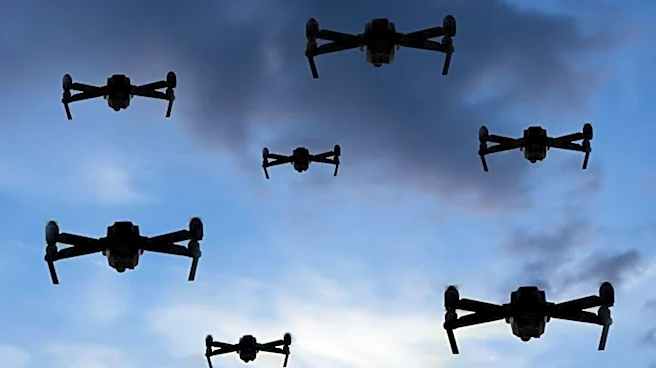
Oblast region on July 22, Ukrainian defenders encountered tanks equipped with Arena-M. While some reports indicated the system successfully shot down a number of drones, Ukrainian forces ultimately destroyed at least seven T-72B3A tanks, including those with Arena-M, by deploying overwhelming numbers of kamikaze drones. Ukrainian soldiers noted that it required between 15 and 20 drones to neutralize each tank. This development highlights Russia's ongoing efforts to adapt its armored vehicles to the drone-dominated modern battlefield, an arms race that has seen various improvised armor solutions like 'cope cages' and 'turtle tanks' previously deployed.
Why It's Important?
The deployment of the Arena-M system signifies a critical evolution in modern warfare, particularly in the context of drone proliferation. The ongoing conflict in Ukraine has underscored the vulnerability of traditional armored vehicles to inexpensive, yet effective, drone attacks. This new system represents a technological countermeasure aimed at restoring the efficacy of tank-led assaults, which have become increasingly rare due to drone threats. The mixed success of Arena-M—shooting down some drones but ultimately being overwhelmed by swarms—illustrates the persistent challenge of protecting high-value military assets against massed, low-cost threats. This arms race between offensive drone technology and defensive anti-drone systems will likely influence future military doctrines and defense spending, impacting how nations design and deploy their ground forces. The lessons learned from this deployment will inform military strategists globally, affecting the development of future active protection systems and drone warfare tactics.
What's Next?
Following the initial deployment and mixed results of the Arena-M system, it is highly probable that Russia will continue to refine and improve its active protection technology. Military analysts anticipate that the system's effectiveness will be enhanced as Russian forces gather more battlefield data and adapt to Ukrainian drone tactics. This ongoing technological arms race will likely lead to further innovations in both anti-drone defenses and offensive drone capabilities. Other nations will closely observe these developments, potentially accelerating their own research and development into similar active protection systems or advanced drone swarming techniques. The incident also suggests a continued shift in battlefield dynamics, where mechanized assaults may remain challenging unless anti-drone defenses can reliably counter large-scale drone attacks. Future engagements will likely feature increasingly sophisticated interactions between armored vehicles and drone swarms.
Beyond the Headlines
The introduction of the Arena-M system and its performance against drone swarms highlights a broader strategic shift in military thinking. The traditional dominance of heavily armored vehicles is being challenged by asymmetric threats, forcing militaries to reconsider the balance between protection, mobility, and cost. The ability of relatively inexpensive drones to neutralize multi-million dollar tanks raises ethical questions about the future of warfare, including the potential for autonomous systems to make targeting decisions. Furthermore, the rapid evolution of battlefield technology, as seen with both drone capabilities and anti-drone systems, underscores the importance of continuous innovation and adaptation in defense strategies. This dynamic environment could lead to a re-evaluation of international arms control treaties and the proliferation of advanced military technologies, impacting global security and stability.