





What's Happening?
The Multilateral Investment Guarantee Agency (MIGA), part of the World Bank Group, has issued a guarantee to support equity investments in Timor-Leste’s first utility-scale solar and battery storage project. This landmark investment, backed by subsidiaries
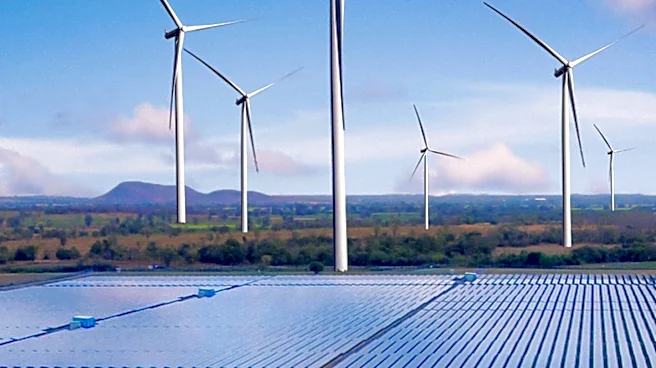
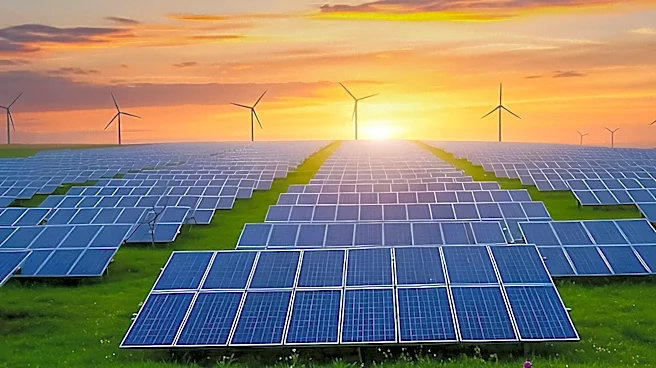
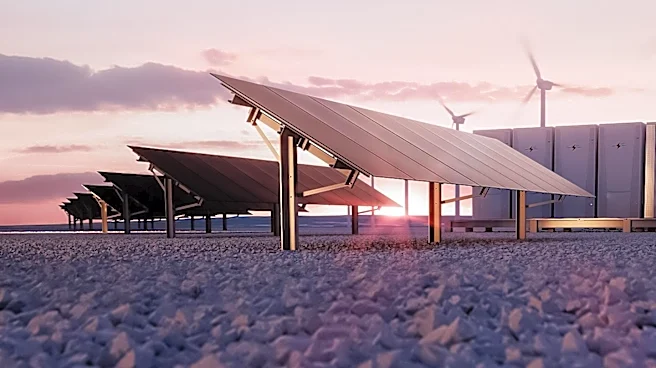
of EDF Group and ITOCHU Corporation, aims to accelerate the energy transition, create jobs, and foster sustainable growth in the country. MIGA is providing a 20-year political risk insurance guarantee to EDF power solutions and I-Environment Investments Pacific for their investments in Manatuto Renewables Power. This entity is responsible for developing, constructing, operating, and maintaining a 73.7 megawatt-AC grid-connected solar photovoltaic plant, an 80.2 megawatt-hour battery energy storage system, transmission lines, and ancillary facilities. The project combines financing solutions from across the World Bank Group, including IFC financing, MIGA guarantees, and blended finance from the International Development Association’s Private Sector Window (IDA PSW). This marks MIGA’s first guarantee project in Timor-Leste and supports the country’s first independent power producer.
Why It's Important?
This investment is crucial for Timor-Leste's energy independence and sustainable development. By reducing reliance on imported diesel, the project will enhance energy security, lower energy costs, and significantly decrease carbon emissions. The annual electricity generated will be equivalent to the consumption of approximately 80,000 households, or about 400,000 people, in Timor-Leste. This initiative aligns with the country's National Strategic Development Plan 2011–2030, which aims to meet 50% of its energy needs from renewable sources by 2030. For the U.S., while not directly involved, this project exemplifies international efforts to promote renewable energy and sustainable development in emerging economies, which can contribute to global stability and climate goals. It also showcases the role of multilateral institutions like MIGA in de-risking investments in challenging markets, encouraging private sector participation in critical infrastructure projects.
What's Next?
The project will proceed with the development, construction, operation, and maintenance of the solar plant and battery storage system. Electricity generated will be sold to Electricidade de Timor-Leste, Empresa Publica (EDTL, E.P.) under a 25-year power purchase agreement. The successful implementation of this project is expected to serve as a model for future renewable energy initiatives in Timor-Leste and potentially attract further international investments. The World Bank Group's comprehensive financing package, including MIGA guarantees, demonstrates a robust framework for supporting similar projects in other developing countries. The project's progress will be closely watched as a case study for how blended finance and political risk insurance can unlock significant private capital for sustainable infrastructure in frontier markets, contributing to global energy transition efforts.
Beyond the Headlines
This project has broader implications beyond immediate energy supply. It represents a significant step towards economic diversification and job creation in Timor-Leste, fostering local capacity building in the renewable energy sector. The reduction in diesel imports will also have positive macroeconomic effects by conserving foreign exchange reserves. Ethically, it underscores the commitment to providing clean, affordable, and reliable energy to populations in developing nations, addressing energy poverty and promoting environmental stewardship. The involvement of major international corporations like EDF and ITOCHU, backed by MIGA, signals growing confidence in renewable energy investments in challenging markets. This could trigger a long-term shift in how development finance institutions and private investors collaborate to de-risk and scale up sustainable infrastructure projects globally, accelerating the transition away from fossil fuels in vulnerable economies and contributing to global climate resilience.