









What's Happening?
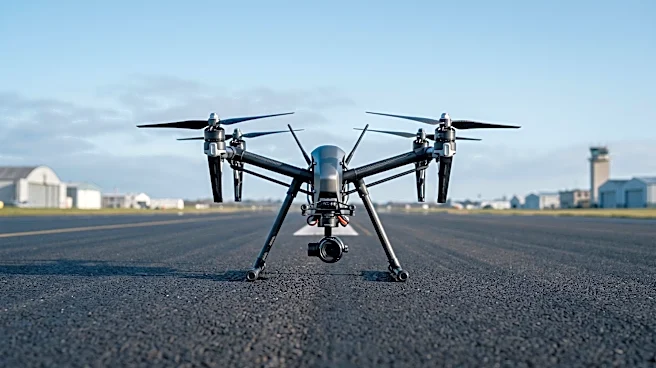
Grand Forks recently hosted the 20th UAS Summit & Expo, marking two decades since the region began establishing itself as a hub for unmanned aviation. The summit, held at the Alerus Center, brought together researchers, industry leaders, military personnel,
and government officials to reflect on past investments and discuss future challenges in the Unmanned Aerial Systems (UAS) industry. Key milestones highlighted include the University of North Dakota (UND) receiving a Center of Excellence designation for UAS work in 2006, launching the nation’s first undergraduate degree program in UAS operations in 2009, and North Dakota being selected as a national UAS test site by the Federal Aviation Administration in 2013. Grand Sky, the nation’s first commercial UAS business and aviation park, opened in 2015 at Grand Forks Air Force Base. U.S. Sen. John Hoeven announced Project ATLAS, a collaboration between UND, NASA, the Department of War, and the North Dakota National Guard to explore combined unmanned aircraft and ground vehicle operations. Additionally, UND was designated as the first university to serve as a clearinghouse for the Joint Interagency Task Force 401’s counter-drone technology efforts.
Why It's Important?
Grand Forks' sustained leadership in unmanned aviation holds significant importance for national security, economic development, and technological advancement in the U.S. The region's two-decade commitment has fostered an ecosystem of research, education, and industry, positioning it at the forefront of UAS innovation. This concentration of expertise and infrastructure, including the Northern Plains UAS Test Site and Grand Sky, is crucial for developing and integrating advanced unmanned technologies into national airspace and defense strategies. The partnerships, such as Project ATLAS, demonstrate a collaborative approach to addressing complex challenges in military training and combat operations, while UND's role in counter-drone technology efforts directly contributes to national security by identifying and developing solutions against emerging threats. Economically, this specialization creates high-tech jobs and attracts investment, diversifying the regional economy and establishing a model for other states seeking to develop niche technological sectors.
What's Next?
The future of unmanned aviation in Grand Forks will likely focus on integrating artificial intelligence, autonomous operations, and advanced sensor technologies into everyday activities and national security applications. UND will continue to expand its research in aerospace, autonomous systems, and space operations, aligning its educational programs to meet the evolving demands of these interconnected fields. The partnerships announced at the summit, particularly Project ATLAS and UND's role in counter-drone technology, are expected to progress, leading to new discoveries and operational capabilities. There will be an ongoing emphasis on moving university research into practical applications, potentially attracting more commercial and governmental investment. The industry will also grapple with the challenges of scaling these technologies and ensuring their safe and ethical integration into society, with Grand Forks continuing to serve as a critical testing ground and development hub.
Beyond the Headlines
The sustained growth of Grand Forks as a UAS hub signifies a profound shift in how the U.S. approaches aviation, defense, and technological innovation. Beyond the immediate economic and security benefits, this development raises deeper implications regarding the future of work, the ethics of autonomous systems, and the evolving nature of warfare. The emphasis on integrating AI and autonomous operations suggests a future where human-machine collaboration becomes increasingly central, requiring new skill sets and regulatory frameworks. The counter-drone initiatives highlight the dual-use nature of many advanced technologies and the constant need to adapt to new threats. Culturally, Grand Forks' transformation from a traditional aviation center to a leader in unmanned systems reflects a broader national imperative to embrace and lead in emerging technological frontiers, shaping not just the aerospace industry but also influencing how society interacts with increasingly intelligent and autonomous machines.