



What's Happening?
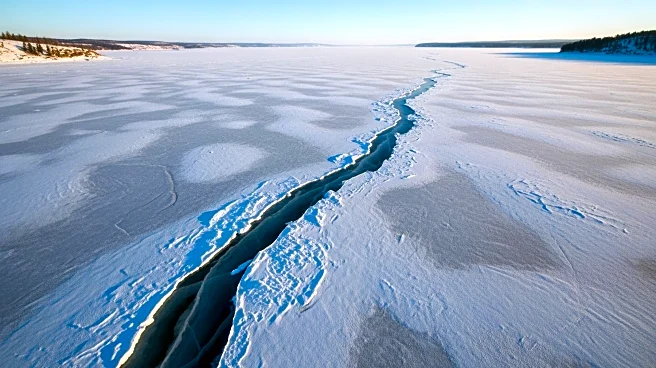
Lake Erie, one of North America's largest freshwater lakes, has developed a massive crack in its ice cover, visible from space. This phenomenon occurred after the lake froze almost completely solid due to extremely cold weather conditions in February.
The lake is currently 94 percent frozen, significantly higher than the typical 65 to 70 percent during peak winter months, according to the National Weather Service Cleveland. The crack, which spans over 80 miles, was captured by the GOES-19 Satellite and has sparked considerable interest due to its size. Meteorologist Chris Vickers shared images of the crack on social media, noting the rapid formation of the fissure. Local residents have reported experiencing the crack's formation as a seismic event, with sounds resembling an earthquake.
Why It's Important?
The formation of such a large crack in Lake Erie's ice cover is significant for several reasons. It highlights the impact of extreme weather conditions on natural bodies of water, which can have broader implications for local ecosystems and human activities. The crack's visibility from space underscores the severity of the freeze and raises concerns about the potential for similar events in other regions. For local communities, such ice movements can pose risks to activities like ice fishing and transportation. Additionally, the event draws attention to the effects of climate variability on the Great Lakes, which are crucial for regional water supply, recreation, and biodiversity.
What's Next?
As the weather warms, the ice on Lake Erie is expected to thaw, potentially closing the crack. However, the event may prompt further study into the effects of extreme weather on the Great Lakes and similar bodies of water. Researchers and meteorologists might investigate the conditions that led to the crack's formation to better predict and manage future occurrences. Local authorities may also consider issuing guidelines or warnings to ensure public safety during such events. The incident could lead to increased monitoring of ice conditions in the Great Lakes region.
Beyond the Headlines
The massive ice crack in Lake Erie could have long-term implications for understanding climate patterns and their impact on large freshwater bodies. It may serve as a case study for examining the resilience of lake ecosystems to extreme weather events. The event also highlights the importance of satellite technology in monitoring environmental changes, providing valuable data for scientists and policymakers. Furthermore, it raises awareness about the potential consequences of climate change on natural resources and the need for adaptive strategies to mitigate risks.