



What's Happening?
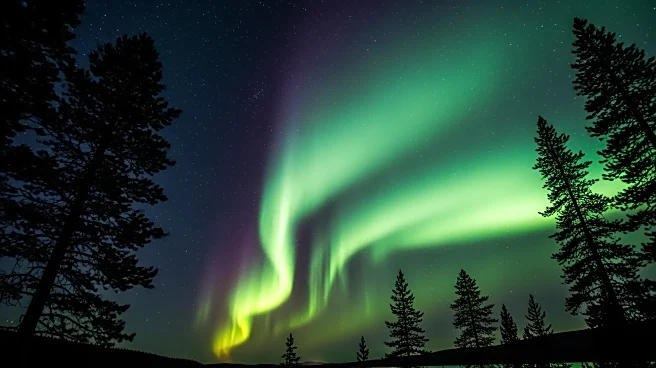
A powerful solar storm, caused by a coronal mass ejection (CME) from the Sun, brought the Northern Lights to unexpected locations on January 19. The CME, which resulted from a significant X1.9 solar flare, traveled the 91 million miles from the Sun to Earth
in about a day, causing geomagnetic storms that fluctuated between G1 and G4 levels. This event led to auroras being visible in mid-latitude regions, far beyond their usual polar confines. The colorful display, featuring hues of red, green, and magenta, was observed in places as far apart as Germany and the southwestern United States. The auroras lasted several hours due to the continued interaction of the CME with Earth's magnetic field.
Why It's Important?
The occurrence of auroras in mid-latitude regions highlights the potential impact of solar activity on Earth's geomagnetic environment. Such events can affect satellite operations, GPS systems, and power grids, posing challenges for technology-dependent societies. The widespread visibility of the Northern Lights also underscores the need for continued monitoring of solar activity to predict and mitigate potential disruptions. Additionally, the event provided a unique opportunity for skywatchers and photographers, raising public interest in space weather phenomena and the science behind them.