



What's Happening?
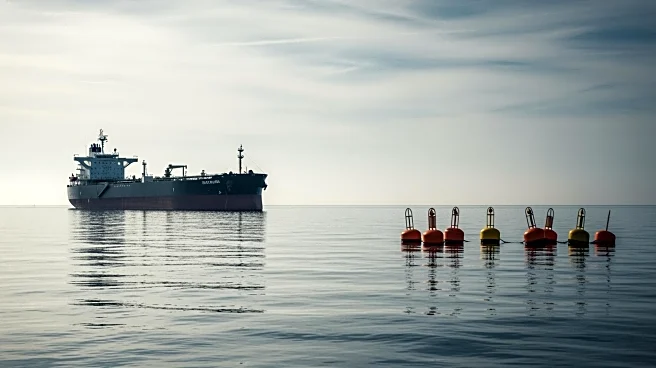
The United States has seized an oil tanker off the coast of Venezuela in international waters, as confirmed by U.S. Homeland Security Secretary Kristi Noem. This action follows President Trump's recent announcement of a blockade on all sanctioned oil tankers
entering and leaving Venezuela. The seized vessel, believed to be the Panama-flagged Centuries, was intercepted east of Barbados. This marks the second such seizure in recent weeks, indicating a heightened U.S. military presence in the region. The U.S. Coast Guard, involved in the operation, has not provided further comments, and the Venezuelan government has yet to respond. The seizure is part of a broader U.S. effort to curb the illicit movement of sanctioned oil, which is reportedly used to fund narco-terrorism.
Why It's Important?
This development underscores the escalating tensions between the U.S. and Venezuela, particularly concerning oil sanctions. The U.S. aims to disrupt financial networks that allegedly support narco-terrorism and other illicit activities. The seizure of the tanker, not previously sanctioned by the U.S., represents an intensification of pressure on Venezuela's oil industry, a critical component of its economy. This action could further strain U.S.-Venezuela relations and impact global oil markets, potentially affecting oil prices and international trade dynamics. The U.S. military's increased presence in the region also signals a commitment to enforcing sanctions, which could lead to further geopolitical tensions.
What's Next?
The U.S. is likely to continue its enforcement of the blockade, potentially leading to more seizures of vessels associated with Venezuela. This could provoke a response from the Venezuelan government, which may seek international support or legal recourse through bodies like the United Nations. The situation may also prompt reactions from other countries involved in Venezuelan oil trade, potentially leading to diplomatic negotiations or conflicts. The U.S. may face criticism or support from international allies, depending on their stance on the sanctions and the broader geopolitical implications.