







What's Happening?
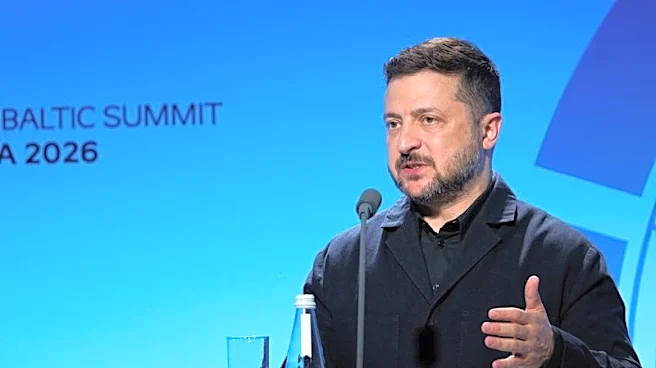
President Volodymyr Zelensky has stated that Russian forces are losing momentum on the battlefield, citing significant casualties and a slowdown in their offensive operations. This assessment aligns with recent analyses from the Washington-based Institute
for the Study of War, which reported minimal territorial gains by Russian forces in recent months. Ukrainian forces have not only maintained their defensive lines but have also regained ground in some sectors. Zelensky highlighted that Ukraine's position has improved over recent months, although he cautioned against overconfidence, noting that the situation on the battlefield remains fluid and can change daily.
Why It's Important?
The developments in the Russia-Ukraine conflict have significant implications for both nations and the broader international community. For Ukraine, the ability to regain territory and disrupt Russian operations represents a strategic advantage that could bolster its negotiating position in any future peace talks. For Russia, the loss of initiative and sustained casualties could lead to increased domestic pressure to end the conflict, as public opinion may shift against prolonged military engagement. The conflict's outcome could also influence global geopolitical dynamics, particularly in Europe, where energy security and regional stability are closely tied to the situation in Ukraine.
What's Next?
While Ukraine's recent gains are promising, President Zelensky emphasized the need for caution, as the battlefield remains volatile. The potential for future negotiations to end the war remains a critical focus, with hopes that diplomatic efforts can eventually lead to a resolution. The international community will likely continue to monitor the situation closely, with potential implications for foreign policy and military support to Ukraine. Additionally, the ongoing conflict may prompt further discussions on security and defense strategies within NATO and other allied nations.