






What's Happening?
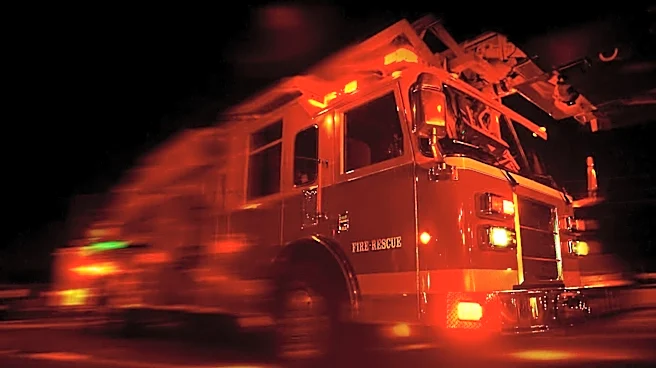
The Cleveland Division of Fire was dispatched to a house explosion and subsequent fire in the city's Lee-Harvard neighborhood early Wednesday morning. The incident occurred near East 160th Street and Miles Avenue. According to a social media post from
the fire division, the house, which was vacant, exploded and caught fire around 4:49 a.m., with the first unit responding at 4:55 a.m. The fire caused approximately $200,000 in damages. Additionally, a neighboring house sustained exterior damage due to the blast and fire. Fortunately, no injuries were reported in connection with this incident. The cause of the explosion and fire is currently under investigation by authorities. This event highlights the rapid response capabilities of local emergency services in managing significant structural incidents within residential areas.
Why It's Important?
This incident is important for several reasons, primarily concerning public safety and community impact in Cleveland. The explosion of a vacant house, while not resulting in injuries in this specific case, poses a significant risk to surrounding properties and residents. The reported $200,000 in damages indicates a substantial financial loss and potential burden on property owners and insurance companies. Furthermore, the damage to a neighboring house underscores the ripple effect such events can have on an entire block or community, potentially displacing residents or requiring extensive repairs. The ongoing investigation into the cause is crucial for identifying any underlying issues, such as gas leaks or structural vulnerabilities, that could prevent similar incidents in the future. This event also serves as a reminder of the critical role of fire departments in responding to and mitigating dangerous situations, protecting both lives and property.
What's Next?
The immediate next step involves the ongoing investigation by the Cleveland Division of Fire to determine the exact cause of the house explosion. This investigation will likely include forensic analysis of the scene, examination of utility connections, and interviews with any potential witnesses. Depending on the findings, there could be implications for building codes, safety regulations, or public awareness campaigns regarding potential hazards in vacant properties. For the affected property owners, the next phase will involve assessing the full extent of the damage, filing insurance claims, and planning for demolition or reconstruction. The community will also be looking for updates on the investigation to understand if there are any broader safety concerns that need to be addressed in the Lee-Harvard neighborhood or other parts of Cleveland.
Beyond the Headlines
Beyond the immediate response and investigation, this house explosion in a vacant property touches upon broader issues facing urban areas, particularly those with older housing stock. Vacant properties can often become targets for vandalism, illegal activities, or neglect, leading to structural deterioration and increased risk of incidents like fires or explosions. This event could prompt discussions among city officials, community leaders, and urban planning departments about strategies for managing and revitalizing vacant homes. Such strategies might include stricter enforcement of property maintenance codes, incentives for redevelopment, or programs to secure and monitor unoccupied structures. The incident also highlights the resilience of communities in the face of unexpected disasters and the importance of robust emergency services infrastructure to protect urban environments.