
What's Happening?
Despite a recent Supreme Court ruling declaring President Trump's 'reciprocal' tariffs illegal, U.S. importers are still required to pay duties on goods entering the country. The tariffs, imposed under the International Emergency Economic Powers Act (IEEPA),
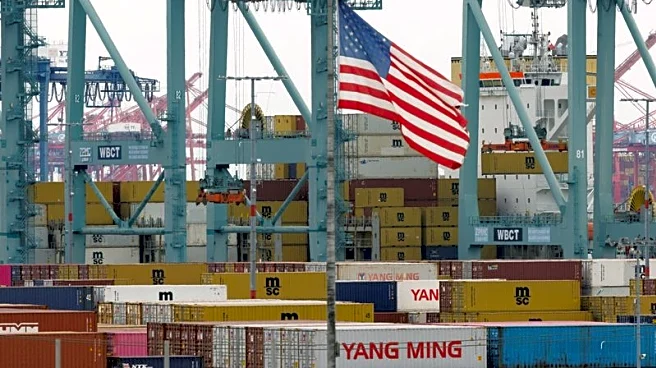
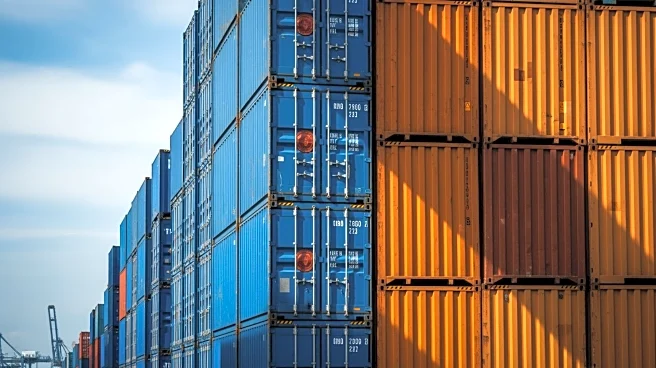
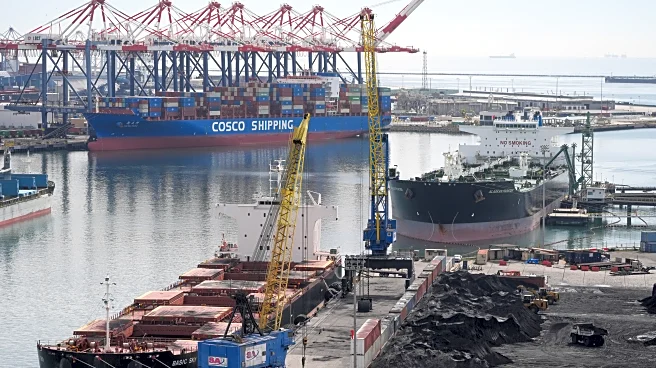
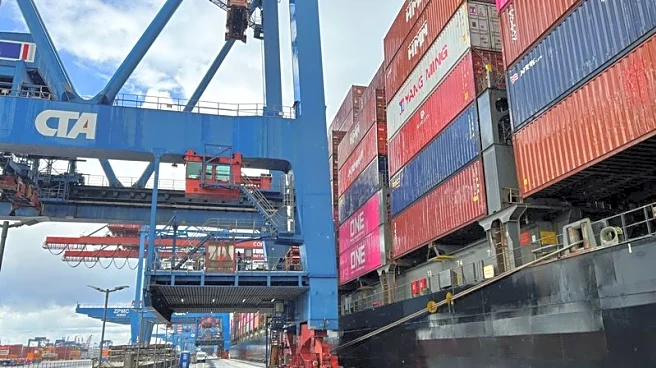
have not yet been removed from the U.S. Customs and Border Protection's (CBP) Cargo System Management Service. This delay affects an estimated 211,000 containers of goods, valued at $8.2 billion, that arrived in U.S. ports over the weekend. Importers have a 10-day window to pay these tariffs, and the CBP is working to update its system to reflect the Court's decision. The ruling has created uncertainty regarding potential refunds, which will be addressed by the U.S. Court of International Trade (CIT).
Why It's Important?
The continued enforcement of tariffs despite the Supreme Court's ruling highlights the complexities of trade policy implementation and the challenges faced by U.S. importers. The delay in updating the CBP's system could lead to financial strain for businesses that rely on imported goods, as they must navigate the uncertainty of potential refunds and system updates. The situation underscores the importance of efficient communication and coordination between government agencies and the private sector to ensure compliance with legal decisions. The outcome of this issue could have broader implications for U.S. trade policy and the administration's ability to enforce tariffs in the future.
What's Next?
The U.S. Customs and Border Protection is expected to update its system to remove the tariffs, but the timeline for this change remains unclear. Importers are advised to keep their customs documents in order as they await further guidance from the CBP and the U.S. Court of International Trade regarding refunds. The CIT's decision on refund mechanisms could take time, potentially leading to delays in financial relief for affected businesses. The situation may prompt discussions on improving the efficiency and responsiveness of trade policy implementation to prevent similar issues in the future.