
What's Happening?
Queer History Boston is conducting historic walking tours of Boston Common and the Public Gardens. These tours aim to highlight the stories of LGBTQ+ Bostonians, including writers, activists, drag queens,
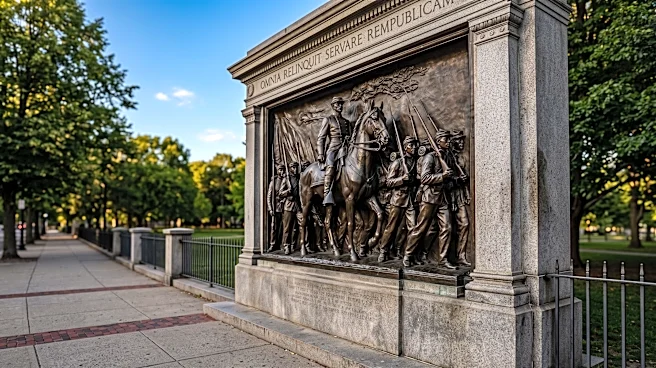
pilgrims, and protestors. The initiative seeks to provide a queer context to historical monuments and establish connections between the community's past and future. The tours commence at Park Street Station, located at the corner of Tremont and Park Street, and conclude at the 54th Regiment Memorial at 26 Beacon St, Boston, MA 02108. This effort by Queer History Boston is part of a broader movement to ensure that LGBTQ+ narratives are recognized and integrated into historical understanding, offering a unique perspective on well-known historical sites.
Why It's Important?
These LGBTQ+ history walking tours are important for several reasons. They contribute to a more inclusive understanding of American history by shedding light on the often-overlooked contributions and experiences of LGBTQ+ individuals in Boston. This initiative helps to preserve and celebrate queer heritage, providing a platform for stories that might otherwise remain untold. For participants, it offers an educational experience that challenges traditional historical narratives and fosters a deeper appreciation for the diversity of the past. Furthermore, by connecting historical struggles and triumphs to contemporary issues, the tours can inspire current and future generations within the LGBTQ+ community and its allies, promoting a sense of identity and continuity. This type of historical interpretation is crucial for fostering social awareness and promoting acceptance.
What's Next?
Queer History Boston is expected to continue offering these walking tours, potentially expanding their schedule or developing new routes to cover other historically significant LGBTQ+ sites in Boston. The success of these tours could encourage similar initiatives in other U.S. cities, leading to a broader recognition and celebration of LGBTQ+ history nationwide. The organization may also seek partnerships with local historical societies, educational institutions, or tourism boards to further integrate queer history into mainstream narratives and attract a wider audience. Continued engagement with the community and historical research will likely lead to the discovery and inclusion of more stories, enriching the tour experience and its educational impact.
Beyond the Headlines
Beyond the immediate educational and cultural benefits, these tours have deeper implications for historical representation and social justice. They challenge the traditional, often heteronormative, framing of history by actively seeking out and centering LGBTQ+ experiences. This process of re-examining historical spaces through a queer lens can lead to a more nuanced understanding of societal development and the complex interplay of identities throughout history. Ethically, it underscores the importance of inclusive storytelling and the right of all communities to see their past reflected and valued. Culturally, such initiatives contribute to a more diverse and equitable public sphere, where historical narratives are not monolithic but rather a rich tapestry of varied human experiences, fostering greater empathy and understanding across different groups.