








What's Happening?
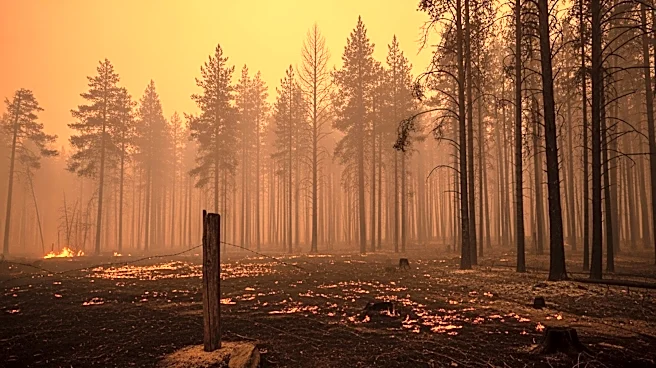
A wildfire driven by high winds has forced the evacuation of approximately 1,500 people in eastern Washington, destroying at least 15 homes. The Spokane County Sheriff's Office reported finding what appeared to be human remains in a home destroyed by the fire,
though confirmation and identification are pending. The fire, which began on Tuesday, quickly spread due to shifting winds, threatening densely populated neighborhoods. Residents were evacuated, often with little notice, leaving behind belongings and essential medications. Fire crews from Washington and Idaho are battling the blaze, which has grown to 225 acres and is 10% contained. The Federal Emergency Management Agency has authorized funds to assist with firefighting costs, as the fire threatens homes, a school, power lines, and wildlife.
Why It's Important?
The wildfire highlights the increasing frequency and intensity of such events in the U.S., exacerbated by climate conditions. The destruction of homes and the potential loss of life underscore the urgent need for effective emergency response and preparedness. The fire's impact on local communities is significant, with residents displaced and infrastructure threatened. The situation also stresses the importance of federal support in managing natural disasters, as evidenced by FEMA's involvement. The broader implications include potential economic losses and the strain on local resources, emphasizing the need for comprehensive strategies to mitigate wildfire risks.
What's Next?
Authorities are focused on containing the fire and ensuring the safety of evacuated residents. Weather conditions, such as wind patterns and temperatures, will play a crucial role in firefighting efforts. The investigation into the fire's cause is ongoing, and further assessments will determine the extent of the damage. Long-term recovery plans will be necessary to support affected communities, including rebuilding efforts and addressing the psychological impact on residents. The event may prompt discussions on improving fire management policies and infrastructure resilience in wildfire-prone areas.