
What's Happening?
The Institute for the Study of War (ISW) has reported a significant slowdown in Russian military advances in Ukraine during the first four months of 2026 compared to the same period in 2025. Russian forces
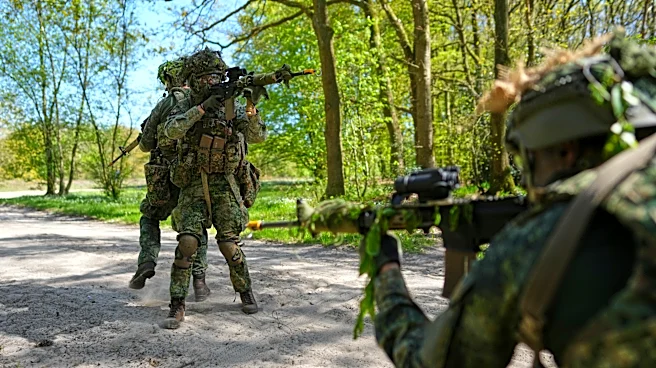
have increasingly employed infiltration tactics since the fall of 2025, which has complicated year-on-year comparisons of territorial gains. From November 2025 to April 2026, Russian forces seized 1,443.35 square kilometers, a decrease from the 2,368.38 square kilometers seized during the same period in 2024-2025. The ISW notes that Russian forces have been using infiltration tactics to create the perception of continuous advances, although these areas are often contested and not fully controlled by Russian forces. The report also highlights logistical challenges faced by Russian forces, including insufficient aircraft and maintenance personnel, which may hinder their ability to increase bombing capabilities.
Why It's Important?
The slowdown in Russian advances and the shift to infiltration tactics reflect broader strategic and operational challenges faced by Russian forces in Ukraine. This development could impact the overall dynamics of the conflict, potentially providing Ukrainian forces with opportunities to counterattack and regain territory. The use of infiltration tactics by Russia may also indicate a strategic pivot to psychological and cognitive warfare, aiming to exaggerate successes and maintain domestic and international support. The logistical issues highlighted in the report suggest potential vulnerabilities in the Russian military's operational capacity, which could influence future engagements and the broader geopolitical landscape.
What's Next?
As the conflict continues, the effectiveness of Russian infiltration tactics and the ability of Ukrainian forces to counter these strategies will be critical. The upcoming months may see changes in the rate of Russian advances as seasonal weather patterns shift, potentially affecting ground conditions. The international community, particularly European and U.S. stakeholders, will likely continue to monitor these developments closely, as they have significant implications for regional stability and security. The ongoing logistical challenges faced by Russian forces may also prompt strategic adjustments or increased international support for Ukraine.