







What's Happening?
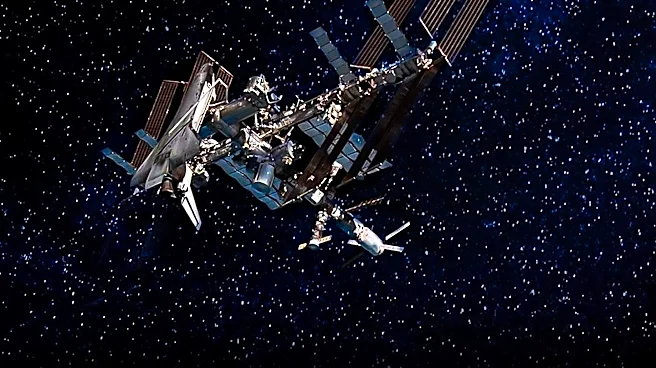
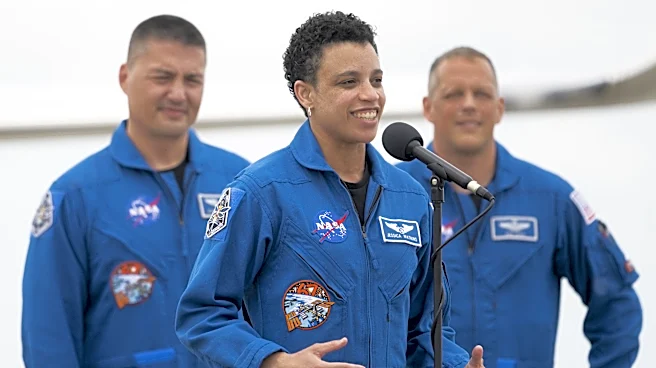
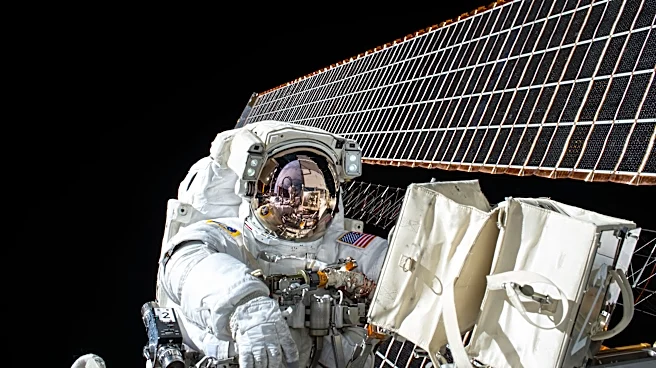
NASA astronaut Jessica Watkins has made history by becoming the first Black woman to command a crewed mission to space. She is leading SpaceX's Crew-13 mission, which launched on October 1, 2026, to the International Space Station (ISS). This marks Watkins'
second spaceflight, having previously flown on SpaceX's Crew-4 mission in 2022, accumulating over 200 days in space. A geologist, astronaut, aquanaut, and former professional rugby player, Watkins brings a diverse skill set to her role as mission commander. While NASA confirmed the pioneering nature of her achievement, the agency did not issue a public statement commemorating the milestone. Commercial astronaut Sian Proctor, the first Black woman to pilot a spacecraft, emphasized the significance of Watkins' leadership for diversity in spaceflight.
Why It's Important?
Jessica Watkins' achievement is a significant milestone for NASA and the United States, marking progress in diversifying the historically white and male-dominated fields of spaceflight and space science. Her role as mission commander serves as a powerful inspiration for underrepresented communities, particularly Black women and girls, demonstrating that leadership roles in STEM are attainable. This event underscores the ongoing efforts to promote inclusivity within NASA's astronaut corps, which currently comprises approximately 45% women and 25% people of color. Increased diversity in space missions can bring varied perspectives and problem-solving approaches, potentially enhancing mission success and scientific discovery. It also reinforces America's commitment to equal opportunity and representation on the global stage of space exploration.
What's Next?
Jessica Watkins will continue to command the SpaceX Crew-13 mission for approximately six months aboard the International Space Station. Her leadership and performance during this extended mission will further solidify her historic role and potentially influence future astronaut selections and mission assignments. The broader conversation around diversity in spaceflight is expected to continue, with commercial space companies like SpaceX playing an increasing role in expanding access and opportunities. NASA's Artemis program is also anticipated to feature diverse crews for future moon landings, building on the precedent set by Artemis II, which included the first person of color to travel beyond low-Earth orbit and the first woman to make the same leap. Continued progress in diversity will depend on ongoing recruitment efforts and the sustained commitment of space agencies and private entities.
Beyond the Headlines
Watkins' command highlights the evolving landscape of human spaceflight, where diversity is increasingly recognized as a strength. Beyond representation, her achievement challenges long-standing biases and stereotypes within scientific and technical fields. The visibility of such milestones can have a profound cultural impact, encouraging broader participation in STEM education and careers among diverse populations. However, it also brings unique pressures, as individuals in pioneering roles often face heightened scrutiny. The lack of a public statement from NASA regarding this historic achievement raises questions about how such milestones are officially recognized and celebrated. This event underscores the ongoing need for systemic changes to ensure equitable opportunities and recognition for all individuals in the pursuit of space exploration.