




What's Happening?
Abdullah Sarhadi, a former Taliban governor of Bamyan, has publicly admitted his direct involvement in the destruction of the ancient Buddha statues in Bamyan during the Taliban's initial rule over Afghanistan. In an interview with the BBC World Service,
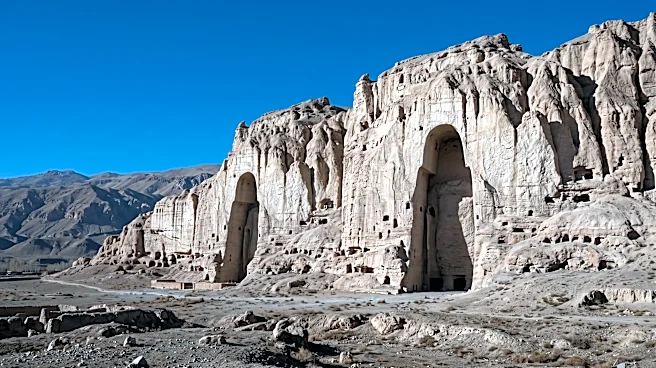
Sarhadi stated that he personally participated in the demolition of the statues, asserting that these actions were carried out in accordance with what he believed to be God's guidance and law. He expressed no regret for the destruction, claiming the Taliban's aim was to destroy idols rather than sell them. The monumental Salsal and Shamama Buddha statues, carved into the cliffs between the third and seventh centuries CE, were destroyed on March 11, 2001, under the orders of then-Taliban leader Mullah Mohammad Omar. Sarhadi, who was a military commander at the time, later served as governor of Bamyan Province after the Taliban's return to power in 2021, until January 2026.
Why It's Important?
Sarhadi's admission is significant as it provides a direct, high-level confirmation of the Taliban's deliberate destruction of Afghanistan's cultural heritage. The Bamyan Buddhas were not only UNESCO World Heritage sites but also invaluable examples of Gandharan Buddhist art, representing a rich historical and cultural legacy. Their destruction sparked widespread international condemnation and symbolized the Taliban's extremist ideology and disregard for cultural preservation. This admission reinforces the international community's concerns about the Taliban's approach to cultural heritage and its potential to repeat such acts. It also highlights the ideological motivations behind these actions, rooted in a strict interpretation of religious law. For Afghanistan, this event represents an irreparable loss of its historical identity and a stark reminder of the challenges in protecting cultural sites under the current regime. The ongoing international efforts to preserve the remaining archaeological sites in Bamyan underscore the global recognition of their importance.
What's Next?
While Sarhadi's admission confirms historical facts, it is unlikely to lead to immediate legal repercussions within Afghanistan under Taliban rule, given his current position and the regime's ideology. However, it may fuel renewed international calls for accountability and increased efforts to protect Afghanistan's remaining cultural heritage sites. UNESCO and other international organizations will likely continue their work to document, preserve, and raise awareness about the cultural significance of Bamyan and other vulnerable sites. The international community may also explore ways to support local initiatives aimed at cultural preservation, potentially through indirect channels. The ongoing display of a sandstone sculpture inspired by the Salsal Buddha in New York City serves as a symbolic reminder of the lost heritage and continued efforts to engage with its legacy.
Beyond the Headlines
Sarhadi's unapologetic admission of destroying the Bamyan Buddhas reveals a deeper ideological commitment within the Taliban to their interpretation of religious doctrine, even at the expense of universally recognized cultural heritage. This act was not merely vandalism but a deliberate assertion of power and a rejection of pluralistic cultural values. The destruction of the Buddhas serves as a potent symbol of iconoclasm and the broader conflict between extremist ideologies and cultural preservation. It raises profound questions about the role of cultural heritage in national identity and the vulnerability of such heritage in conflict zones. The international response, while condemning the act, also highlights the limitations of external intervention in protecting cultural sites when a sovereign power is determined to destroy them. The long-term implications include the ongoing struggle to safeguard cultural diversity and the need for sustained global efforts to promote understanding and respect for different historical narratives.