







What's Happening?
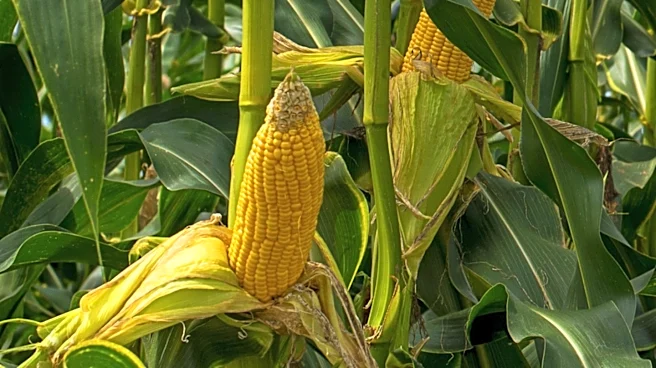
Dean Malvick, an extension plant pathologist with the University of Minnesota, is advising corn growers to remain vigilant regarding crop diseases, even as the risk for late-season issues like tar spot and southern rust begins to lessen. According to Malvick, corn crops
that have reached the dent stage or beyond are generally considered to be out of the high-risk period for significant damage from these fungal diseases. He emphasizes that at these advanced maturity stages, fungicide applications offer minimal benefit, as most fungicides are more effective as preventative measures rather than cures. While the overall risk is decreasing in many areas due to corn maturity, Malvick stresses the importance of continued monitoring to track disease development and prevalence. This guidance comes as farmers navigate the late stages of the growing season, balancing disease management with crop development.
Why It's Important?
This information is crucial for U.S. corn farmers, particularly in regions susceptible to tar spot and southern rust, as it directly impacts their decision-making regarding crop management and financial investments. Misjudging the risk of late-season diseases can lead to unnecessary fungicide applications, incurring significant costs without providing a proportional benefit to yield. Conversely, neglecting monitoring could result in undetected disease progression in less mature fields, potentially leading to yield losses. The advice from the University of Minnesota helps farmers optimize their resource allocation, ensuring that costly interventions like fungicide treatments are applied only when they are most effective and economically justified. This guidance supports sustainable agricultural practices by promoting informed decision-making and reducing the overuse of chemical treatments, which can have broader environmental and economic implications for the agricultural sector.
What's Next?
Farmers are encouraged to continue scouting their fields, particularly those with corn that has not yet reached the dent stage, to identify any lingering disease development. The focus will shift from active treatment to post-harvest management strategies, especially in fields with a history of tar spot. This includes considering crop rotation, residue management, and tillage practices to reduce the overwintering of disease spores and mitigate future risks. Agricultural extension services will likely continue to provide updates and recommendations based on regional disease pressure and weather patterns. The data collected on late-season disease prevalence will also inform hybrid selection for future planting seasons, guiding farmers toward varieties with better resistance profiles to these persistent fungal threats.
Beyond the Headlines
The ongoing challenge of managing diseases like tar spot and southern rust highlights the dynamic nature of modern agriculture and the continuous need for adaptive strategies. The emphasis on understanding crop maturity stages for disease management underscores a broader trend towards precision agriculture, where decisions are increasingly data-driven and tailored to specific field conditions. This approach not only aims to protect yields but also to enhance the economic viability of farming operations by minimizing unnecessary input costs. Furthermore, the spread and persistence of these diseases could influence agricultural research priorities, driving the development of new resistant corn hybrids and more effective, environmentally sound disease control methods. The long-term implications include potential shifts in regional corn production practices and increased collaboration between farmers, researchers, and extension services to combat evolving agricultural threats.