



What's Happening?
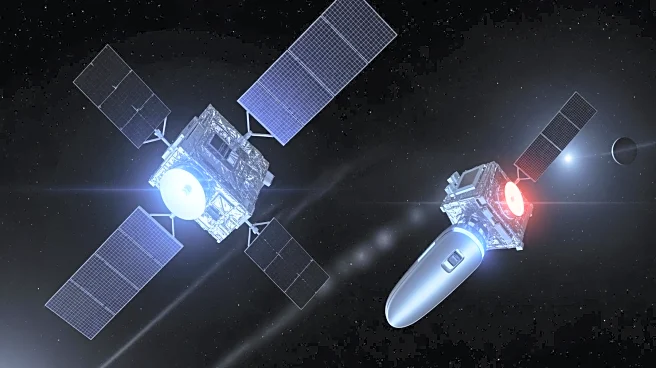
The U.S. Space Command, in collaboration with France's Space Command, has successfully conducted a bilateral on-orbit operation involving joint satellite maneuvers. This operation is part of a multinational space warplan aimed at demonstrating rendezvous
and proximity operations. The exercise underscores the collaborative efforts between the U.S. and France in space operations, showcasing their ability to conduct dynamic and responsible maneuvers to deter adversaries. This development comes amid a broader Pentagon plan to consolidate several major military headquarters, which may include downgrading Space Command and Cyber Command under a new U.S. Global Command. This restructuring aims to reduce the number of combatant commands from 11 to eight.
Why It's Important?
The joint satellite maneuvers between the U.S. and France highlight the growing importance of international cooperation in space operations. As space becomes an increasingly contested domain, such collaborations are crucial for maintaining strategic advantages and ensuring the security of space assets. The potential downgrading of Space Command as part of a broader Pentagon consolidation plan could have significant implications for U.S. military strategy and command structure. This move may streamline operations and reduce costs, but it also raises questions about the future prioritization of space and cyber operations within the U.S. military hierarchy.
What's Next?
The Pentagon's plan to consolidate military commands is likely to face scrutiny and debate among policymakers and military leaders. Stakeholders will need to assess the potential impacts on operational effectiveness and strategic priorities. Additionally, the U.S. and France may continue to expand their collaborative efforts in space, potentially involving other allied nations to strengthen collective security measures in the space domain.