







What's Happening?
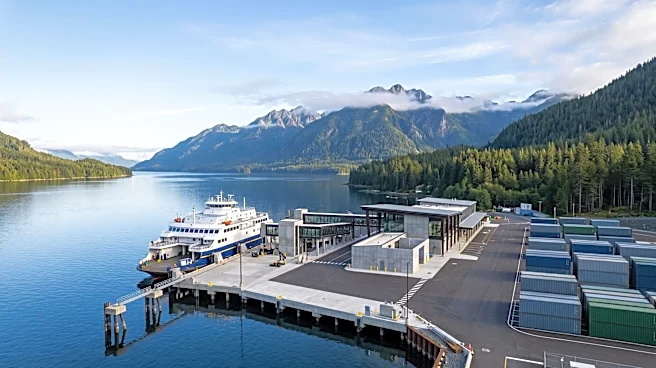
Ketchikan has received $20.6 million in Federal Transit Administration funding for the Saxman Seaport project. This initiative aims to construct a new terminal for the Alaska Marine Highway System (AMHS) ferry service, specifically designed to alleviate
congestion in downtown Ketchikan's waterfront. The project is envisioned as a comprehensive commercial and transit hub, extending beyond just a ferry terminal. It will include dedicated staging areas for commercial cargo, facilities for handling freight containers, direct connections to local highways, and public access points such as potential boat launches. The new terminal is expected to shorten the ferry route between Ketchikan and Annette Bay, enabling more frequent trips. Preliminary designs for the project have been underway, with engineers collaborating with local leadership from Saxman, Metlakatla, and the broader region to finalize the optimal layout. This funding accelerates the project's timeline, which was previously part of a longer-range plan.
Why It's Important?
This significant federal investment in the Saxman Seaport project holds substantial importance for regional transportation and economic development in Alaska. By creating a new, dedicated ferry terminal and commercial hub, the project is expected to enhance the efficiency and capacity of the Alaska Marine Highway System, a critical transportation link for many Alaskan communities. The improved transit times and increased frequency of ferry services between Ketchikan and Annette Bay will directly benefit residents and businesses reliant on the AMHS for travel and cargo transport. Furthermore, the development of commercial cargo staging areas and freight container handling facilities will streamline logistics and potentially reduce operational costs for businesses, fostering economic growth in the region. The project's design to relieve pressure on downtown Ketchikan's waterfront also suggests a strategic effort to manage urban development and improve the quality of life for residents by mitigating congestion.
What's Next?
With the $20.6 million in Federal Transit Administration funding secured, the Saxman Seaport project is set to move forward with an accelerated timeline. The state plans to update its long-range transportation plan, estimated for late 2026, to incorporate this early grant award and ensure the plan remains current. Engineers will continue to work on the detailed designs, collaborating with local leadership from Saxman, Metlakatla, and the region to finalize the layout and specifications for the terminal and associated infrastructure. Construction phases will follow the completion of design and permitting processes. Additionally, the state is still engaged in discussions with Prince Rupert regarding the aged terminal infrastructure there, indicating potential future developments or decisions concerning AMHS service to that British Columbia port. The focus will be on addressing the existing challenges with the Prince Rupert facility, which currently does not have active AMHS ship calls.
Beyond the Headlines
The Saxman Seaport project represents a broader strategic effort to modernize and enhance critical infrastructure in Alaska, particularly for its unique marine highway system. Beyond the immediate benefits of improved ferry service and commercial logistics, this investment underscores the federal government's recognition of the importance of reliable transportation networks in remote and geographically challenging regions. The project's emphasis on a comprehensive commercial and transit hub suggests a forward-thinking approach to regional development, aiming to create a resilient and efficient multimodal transportation system. This could serve as a model for other coastal communities facing similar challenges with aging infrastructure and increasing demand for efficient cargo and passenger movement. The ongoing discussions with Prince Rupert also highlight the complex international and cross-border considerations inherent in managing such a system, pointing to the need for sustained diplomatic and logistical efforts to maintain vital connections.