



What's Happening?
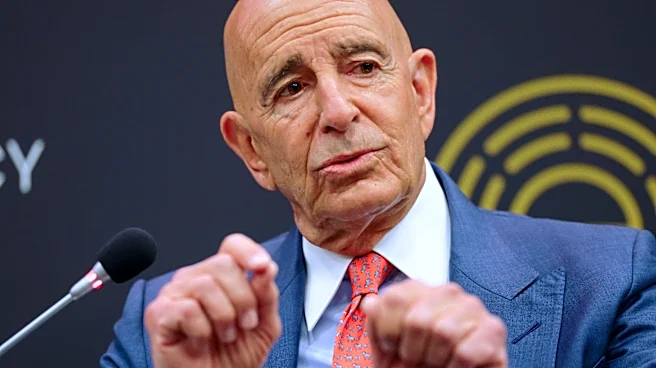
The U.S. special envoy to Syria and ambassador to Turkey, Tom Barrack, has clarified earlier remarks regarding the Golan Heights. On Sunday, Barrack walked back comments made two days prior in an interview, where he stated that Israel 'still' occupies
the Golan Heights in violation of U.N. resolutions. These initial remarks contradicted President Trump's 2019 recognition of Israeli sovereignty over the territory, a move that reversed decades of U.S. policy. Barrack explained that his earlier statement was intended to describe the historical status of the territory, not to endorse the United Nations' position. He affirmed that U.S. policy on the Golan Heights, as set by President Trump in 2019, remains unchanged. Israel captured the Golan Heights from Syria in the 1967 Mideast war and annexed it in 1981, a move not recognized by the United Nations or most of the international community, which considers it occupied Syrian land. Barrack's clarification comes after his initial comments sparked backlash, including criticism from Florida Republican Senator Rick Scott.
Why It's Important?
This clarification from Ambassador Barrack is important because it reaffirms the official U.S. stance on the Golan Heights, aligning with President Trump's 2019 declaration. Any perceived deviation from this policy by a U.S. envoy could create diplomatic confusion and potentially strain relations with key allies in the Middle East, particularly Israel. The U.S. recognition of Israeli sovereignty over the Golan Heights was a significant shift in international diplomacy, and maintaining a consistent message is crucial for the credibility of U.S. foreign policy. Inconsistent statements could be interpreted as a weakening of support for Israel or a re-evaluation of the territory's status, which could have broader implications for regional stability and ongoing peace efforts. The incident highlights the sensitivity surrounding the Golan Heights and the careful diplomatic language required when discussing such contested territories, especially given the complex geopolitical landscape of the Middle East.
What's Next?
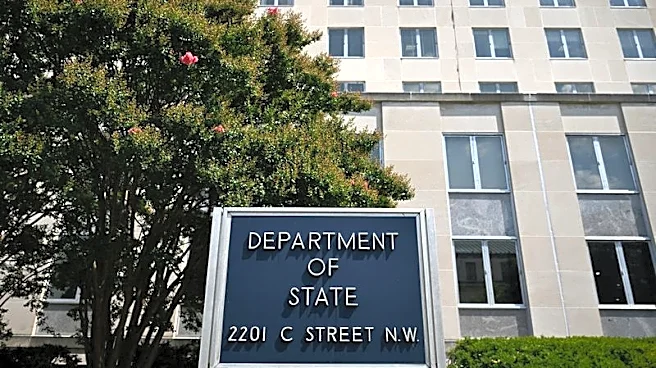
Following Ambassador Barrack's clarification, the immediate focus will likely be on ensuring that the U.S. diplomatic message regarding the Golan Heights remains consistent across all official channels. The U.S. State Department and other relevant agencies will likely reinforce the established policy to prevent further misinterpretations or diplomatic incidents. Stakeholders, including Israeli and Syrian officials, as well as international bodies like the United Nations, will be observing U.S. statements closely for any signs of policy shifts. While Barrack's clarification aims to put the issue to rest, the underlying tensions surrounding the Golan Heights and its international status will persist. Future discussions or negotiations concerning regional stability in the Middle East may still touch upon the territory, requiring continued diplomatic vigilance from the U.S. to uphold its stated position.
Beyond the Headlines
The incident surrounding Ambassador Barrack's comments on the Golan Heights underscores the delicate balance of U.S. foreign policy in the Middle East and the enduring impact of historical conflicts. The Golan Heights, a strategically vital plateau, remains a flashpoint in the Israeli-Syrian conflict, with its status deeply intertwined with national security concerns for both nations. President Trump's decision to recognize Israeli sovereignty was a significant departure from previous U.S. administrations, reflecting a broader shift in U.S. engagement in the region. This event also highlights the challenges faced by diplomats in communicating complex policy positions, especially when historical context and international law diverge from current political stances. The episode serves as a reminder that even seemingly minor verbal missteps can have amplified consequences in a region marked by deep-seated historical grievances and ongoing geopolitical rivalries, potentially influencing perceptions of U.S. reliability and commitment.