





What's Happening?
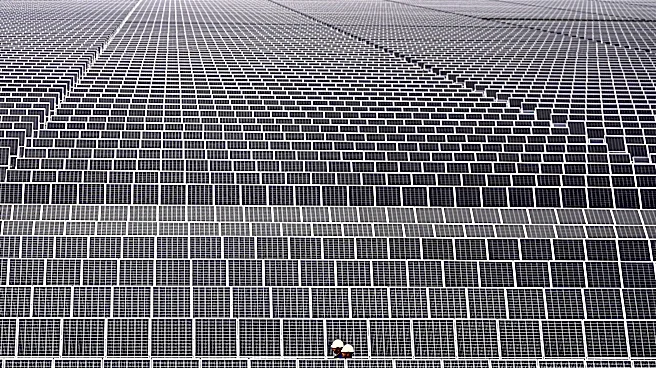
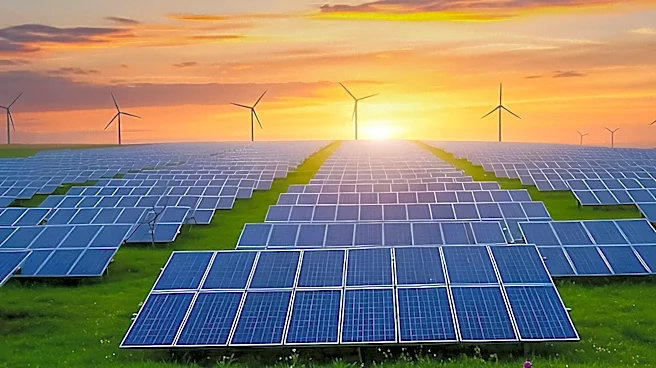
According to the 2026 Global Carbon Budget report, annual carbon dioxide (CO2) emissions from fossil fuels are projected to decrease by 0.4% this year. This marks the first decline since the 2020 pandemic and is attributed partly to the expansion of solar
and wind power capacity and the price increases caused by the Iran conflict. The report, published in the journal Earth System Science Data, indicates that while global energy demand has grown, about two-thirds of this increase is being met by clean technologies like solar, wind, and electric vehicles. However, the 0.4% reduction is also significantly influenced by a 1.9% drop in oil emissions, a short-term response to global supply constraints and increased prices resulting from the Iran conflict. Joeri Rogelj, a climate scientist at Imperial College London, noted that while the slowing growth of emissions is encouraging, the projected decline is very small. Total global CO2 emissions from all sources, including human-caused peat fires, deforestation, and forest fires linked to El Niño conditions, are still projected to increase slightly to a record 43.3 billion metric tons this year.
Why It's Important?
This slight decrease in fossil fuel emissions is important as it signals that decarbonization efforts and the growth of renewable energy are beginning to make a measurable impact on global carbon output. The U.S., along with Australia, New Zealand, South Korea, the United Kingdom, Japan, and about 30 EU countries, are among 40 nations that have cut emissions while growing their economies over the past decade. Specifically, annual CO2 emissions are projected to decrease by 1.3% in the U.S. This trend demonstrates that economic growth and emissions reduction are not mutually exclusive, offering a pathway for other nations. However, the report also highlights a critical caveat: a significant portion of this year's decline is due to the temporary impact of the Iran conflict on fuel availability and prices. This suggests that without sustained and accelerated deployment of clean energy, emissions could rebound once geopolitical tensions ease, as observed after the COVID-19 pandemic. The overall increase in total CO2 emissions due to other factors like wildfires underscores the complexity of achieving net-zero targets and the urgency of comprehensive climate action.
What's Next?
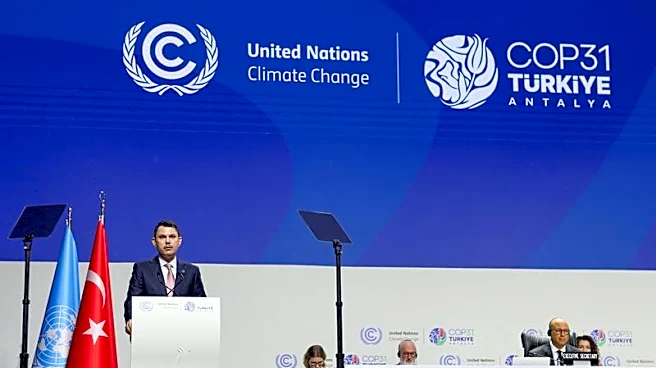
The report will be presented at the U.N. Climate Change Conference's COP31 meeting in Antalya, Turkey, this week, where it will inform international climate policy discussions. While the current decline in fossil fuel emissions is small, scientists like Joeri Rogelj see it as an encouraging sign of deeper long-term structural changes. However, he emphasizes that this shift must accelerate to outpace growing energy demand. The study authors expect a steady decline in global CO2 emissions attributable to fossil fuels in the next few years, provided there is a continued push to deploy solar and wind power, batteries, and electric vehicles. The remaining carbon budget before global warming reaches 1.5 degrees Celsius is now just 150 billion metric tons, equivalent to less than four years of emissions at the current rate. This stark reality means that more ambitious emissions cuts are needed to prevent further increases in global warming, with some scientists believing the 1.5°C target may already be unattainable without extensive CO2 removal from the atmosphere.
Beyond the Headlines
The interplay between geopolitical events, economic forces, and climate action revealed in this report offers a nuanced perspective on the global energy transition. The temporary reduction in emissions due to the Iran conflict highlights the fragility of progress when it is not solely driven by systemic changes towards sustainability. It underscores the ethical dilemma of whether a crisis-induced reduction in emissions can be considered a 'win' for the climate, or merely a pause. The report also implicitly points to the uneven global landscape of climate action, with India's projected 4.4% increase in CO2 emissions contrasting with reductions in developed nations. This disparity raises questions about global equity and shared responsibility in addressing climate change. Ultimately, the findings suggest that while clean energy technologies are making a difference, the pace of their adoption and the political will to implement drastic emissions cuts are still insufficient to meet critical climate targets, pushing humanity closer to irreversible environmental thresholds.