



What's Happening?
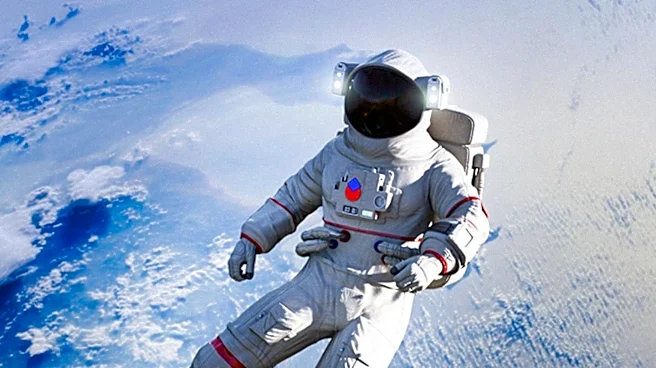
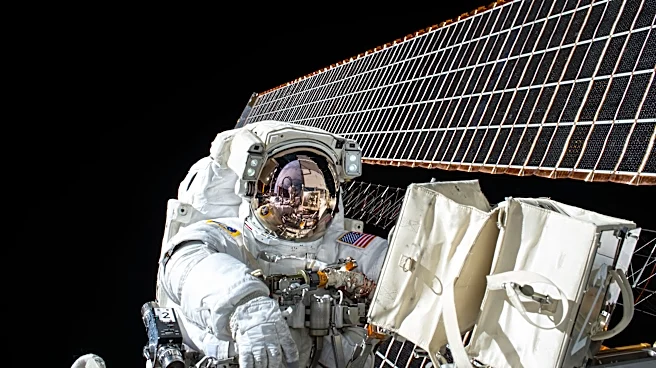
Canadian Space Agency astronaut Joshua Kutryk was photographed during a spacewalk on October 29, 2026, while tethered to the International Space Station (ISS) orbiting 267 miles (430 kilometers) above the South Atlantic Ocean. This spacewalk was the first
for a Canadian astronaut since 2019. During this excursion, Kutryk and NASA astronaut Anil Menon collaborated to install a new roll-out solar array on the station and performed preparatory tasks for a subsequent spacewalk. The same two astronauts were scheduled to venture out again on November 5, 2026, to install the eighth and final roll-out solar array, which, according to NASA officials, will increase the station's available power by 30%. The photograph captured Kutryk taking a moment during the demanding spacewalk, with Earth visible in the background.
Why It's Important?
This event underscores the critical and challenging nature of spacewalks in maintaining and upgrading the International Space Station, which is vital for ongoing scientific research and future space missions. The installation of new solar arrays is essential for boosting the ISS's power capacity, enabling it to support more experiments and advanced technologies. The participation of a Canadian astronaut highlights international collaboration in space exploration, a cornerstone of the ISS program. Such missions are not only about technical achievements but also serve as powerful visual reminders of human endeavor and the unique perspective of Earth from space. The increased power generation is crucial for the ISS's operational longevity, especially as NASA plans to continue its operations through 2030, supporting the transition to commercial space stations.
What's Next?
The spacewalk on October 29, 2026, was a precursor to the final installation of the eighth roll-out solar array on November 5, 2026, which was expected to significantly boost the ISS's power capabilities. With the completion of these installations, the ISS will be better equipped to handle its growing electrical demands, supporting a wider range of scientific experiments and life-support systems. Astronauts Kutryk and Menon will continue their duties aboard the ISS before their scheduled returns to Earth in March and April, respectively. The success of these spacewalks reinforces the importance of human involvement in complex space operations and sets a precedent for future maintenance and construction tasks on both the ISS and upcoming commercial space stations.
Beyond the Headlines
Beyond the immediate technical achievement of installing solar arrays, this event highlights the enduring human element in space exploration. Despite advancements in robotics, the ability of astronauts to perform intricate tasks and adapt to unforeseen challenges in the harsh environment of space remains indispensable. The image of astronaut Kutryk with Earth in the background serves as a powerful symbol of humanity's reach into the cosmos and the profound connection between our planet and space exploration. Such moments can inspire future generations in STEM fields and foster a deeper appreciation for international cooperation in scientific endeavors. The increased power capacity of the ISS also signifies a strategic investment in long-term space infrastructure, which is foundational for future deep-space missions and the development of a sustainable space economy.