









What's Happening?
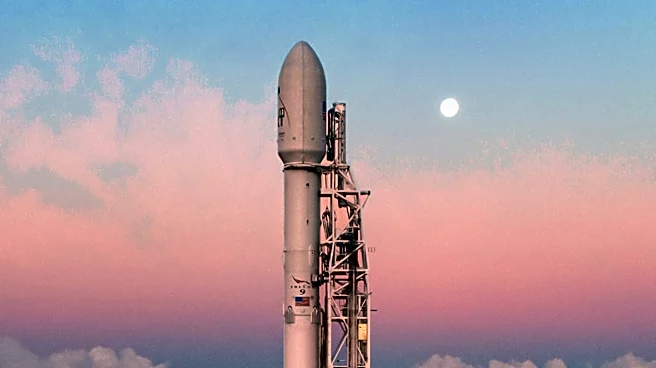
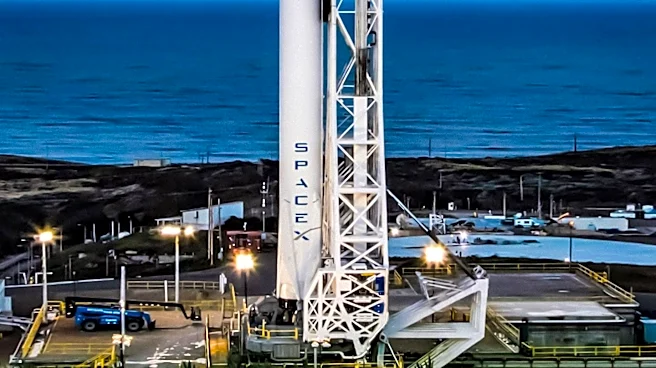
Blue Skies Space has successfully transitioned its Mauve satellite into full scientific operations, marking a significant milestone as the world's first commercial space telescope. Launched in November 2025 aboard a SpaceX Falcon 9, Mauve has begun delivering
its first datasets to an international roster of universities participating in the Mauve Science Program. The satellite, a CubeSat equipped with a 5-inch Cassegrain telescope, is designed to observe ultraviolet light from stars, a spectrum not visible from Earth due to atmospheric interference. This capability allows researchers to study stellar flares, binary systems, and exoplanets. The data delivery follows a period of calibration and tuning, with the first light captured in February 2026. Blue Skies Space plans to publish a peer-reviewed paper on the commissioning process, with further research papers expected as data collection continues.
Why It's Important?
The operational success of the Mauve satellite represents a pivotal advancement in space-based astronomical research, particularly in the study of ultraviolet light. This development provides universities with unprecedented access to data that can enhance understanding of stellar behaviors and their impacts on exoplanetary environments. The subscription model of the Mauve Science Program democratizes access to space-based research, allowing institutions to participate without the geopolitical constraints often associated with government-funded projects. This model could set a precedent for future collaborations in the scientific community, promoting a more inclusive approach to space research.
What's Next?
As Mauve continues its data collection, Blue Skies Space is preparing to expand its offerings. The company is developing Twinkle, a larger satellite, and a lunar radio astronomy CubeSat project. Additionally, a next-generation UV satellite is in the works, informed by Mauve's early performance. The company is also planning an educational program to allocate observing time for public engagement, fostering broader interest and participation in space science. The outcomes of the first year of observations will shape future research directions and potentially lead to the construction of additional satellites if demand continues to grow.
Beyond the Headlines
The Mauve satellite's success highlights the potential for commercial entities to contribute significantly to scientific research traditionally dominated by government agencies. This shift could lead to more agile and responsive research capabilities, as private companies can operate without the bureaucratic constraints of public institutions. The model also encourages a collaborative approach, where scientific priorities are determined collectively by participating institutions, potentially leading to more innovative and diverse research outcomes.