







What's Happening?
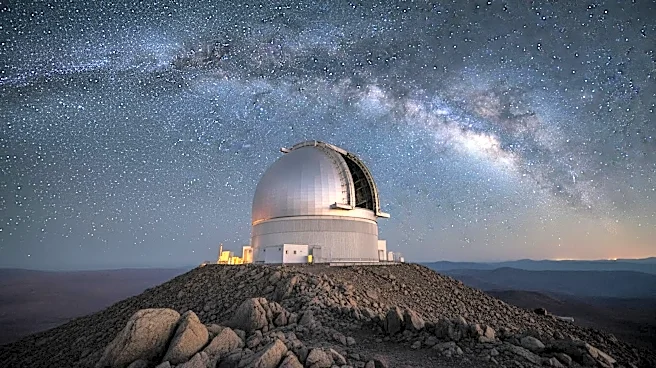
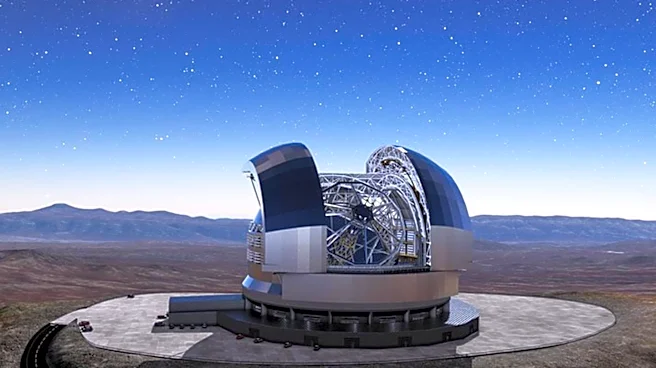
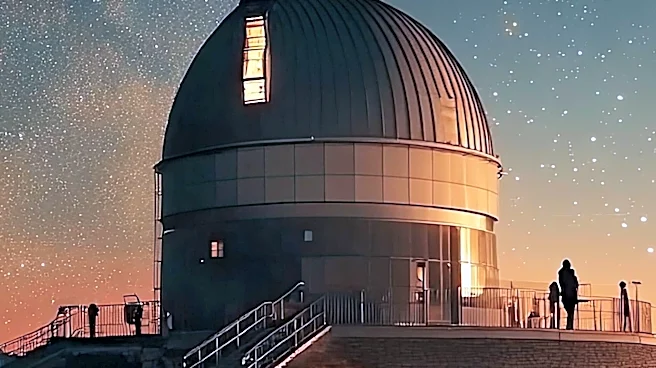
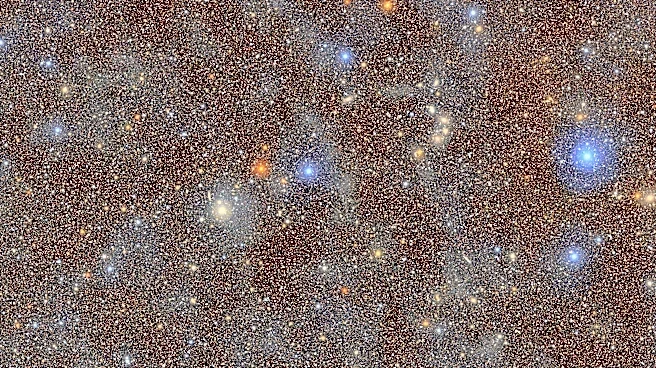
The Vera C. Rubin Observatory in Chile has commenced its Legacy Survey of Space and Time, marking the start of the most detailed survey of the universe ever conducted. Utilizing the largest camera ever built, the observatory will capture high-resolution
images of the southern sky over the next decade, collecting about 10 terabytes of data nightly. This survey aims to map the solar system, the Milky Way galaxy, and beyond, providing a comprehensive record of the universe. The observatory has already begun alerting researchers to changes in the night sky, such as supernovae and asteroid movements, and has discovered over 11,000 new asteroids.
Why It's Important?
The survey conducted by the Vera C. Rubin Observatory is crucial for advancing our understanding of the universe. By creating a detailed map of the sky, the observatory will help scientists study rare cosmic events, gain insights into dark matter and dark energy, and understand the universe's expansion. The data collected will also contribute to the most complete inventory of solar system objects, enhancing our knowledge of celestial bodies and their dynamics. This survey represents a significant leap in astronomical research, offering unprecedented opportunities for discovery and exploration.
What's Next?
As the survey progresses, researchers will analyze the vast amounts of data to uncover new cosmic phenomena and refine existing astronomical models. The observatory's findings will likely lead to new theories and insights into the universe's structure and behavior. Ongoing analysis will focus on understanding dark matter and dark energy, potentially leading to breakthroughs in these enigmatic areas of study. The survey's results will also inform future space missions and observational strategies, shaping the direction of astronomical research for years to come.