
What's Happening?
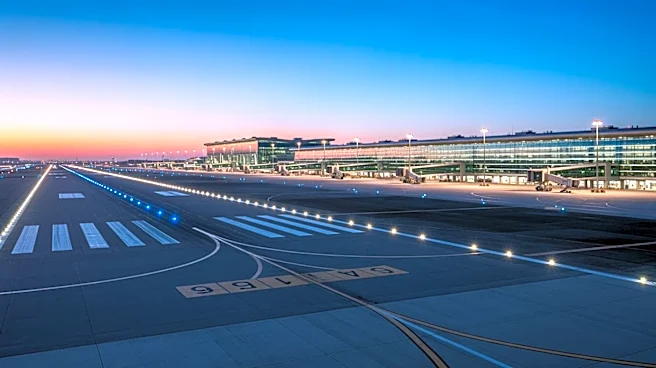
Beijing Capital International Airport is experiencing significant growth in international passenger traffic, despite geopolitical pressures affecting key markets. In 2025, the airport handled 70.7 million
passengers, marking a 5% increase from the previous year, with international and regional travelers accounting for 17.3 million, a 16.3% rise. This growth has continued into 2026, with 12.1 million passengers recorded in January and February, an 8.6% year-on-year increase. The airport has focused on expanding its international network, adding destinations such as Oslo, Tel Aviv, Male, and Tbilisi in 2025, and Abu Dhabi in early 2026. Air China plans to resume operations to New Delhi on April 21 after a six-year hiatus. The airport has introduced incentive schemes, including exemptions on landing charges for new international routes or increased frequencies.
Why It's Important?
The expansion of Beijing Capital International Airport's international capacity is crucial for maintaining its position as a major global hub. The growth in passenger traffic, particularly international travelers, indicates strong demand and resilience despite geopolitical tensions. This expansion supports China's broader economic goals by enhancing connectivity and facilitating international trade and tourism. The airport's incentive schemes aim to attract more airlines and increase route frequencies, which can boost economic activity and create jobs. However, geopolitical challenges, such as tensions with Japan, pose risks to certain routes and could impact future growth.
What's Next?
Beijing Capital International Airport plans to further enhance global connectivity by developing routes to growing markets in Asia, Africa, and South America. The airport expects additional slot availability as infrastructure expands, which will help alleviate longstanding constraints. This expansion, combined with China's projected economic growth, is expected to sustain demand. However, geopolitical tensions remain a significant challenge, and the airport will need to navigate these issues carefully to maintain growth momentum.
Beyond the Headlines
The geopolitical tensions affecting Beijing Capital International Airport highlight the complex interplay between international relations and global transportation networks. The airport's ability to expand despite these challenges underscores the importance of strategic planning and adaptability in the aviation industry. The focus on expanding routes to diverse markets reflects a broader trend of diversification in response to geopolitical uncertainties. This approach not only mitigates risks but also positions the airport to capitalize on emerging opportunities in less affected regions.