

What's Happening?
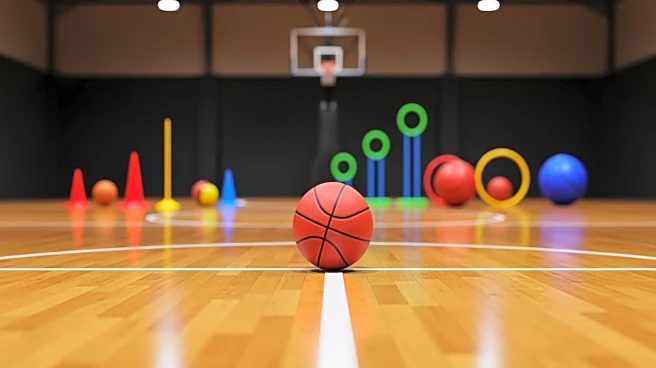
Schools across the United States are increasingly integrating sports into their curricula to enhance students' social-emotional learning (SEL) skills. This approach is being adopted as educators observe that today's students often struggle with emotional regulation
and social interactions compared to previous generations. Despite challenges such as funding, staffing, and the politicization of SEL curricula, sports are being used as a vehicle to teach character-building skills. According to experts and district leaders, youth sports, when designed to promote positive development, can improve skills like goal-setting, empathy, self-control, and socialization. The La Mesa-Spring Valley school district in California exemplifies this approach by incorporating SEL lessons into their sports programs, helping students become better teammates both on and off the field.
Why It's Important?
The integration of sports into SEL programs is significant as it addresses the growing need for emotional and social skills development among students. This method not only supports academic growth but also contributes to overall well-being. By focusing on mastery and positive peer interactions rather than just performance, students learn to handle stress and challenges constructively. This approach can lead to improved student behavior, better handling of losses, and enhanced teamwork, which are crucial skills in both academic and real-world settings. The success of such programs could influence other districts to adopt similar strategies, potentially leading to widespread improvements in student well-being and educational outcomes.
What's Next?
As more districts observe the benefits of integrating sports with SEL, it is likely that this approach will gain traction. Schools may begin to allocate more resources towards developing comprehensive sports-based SEL programs. Additionally, there could be increased collaboration between educators, coaches, and mental health professionals to refine these programs and ensure they meet the diverse needs of students. The ongoing evaluation of these programs' effectiveness will be crucial in shaping future educational policies and practices.