






What's Happening?
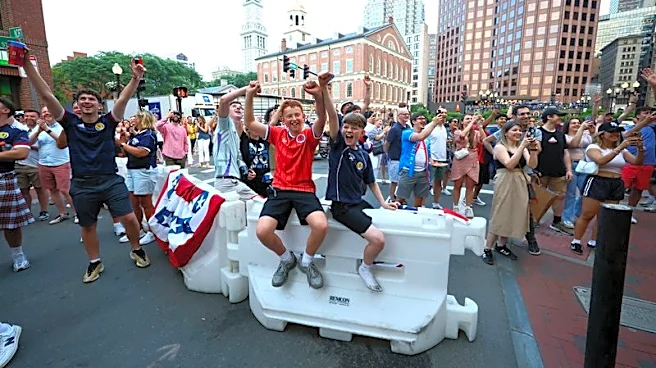
Tourists visiting the United States for the World Cup have shared a variety of experiences and opinions about American culture and hospitality. Many visitors have expressed surprise at the large portion sizes in American restaurants, with one tourist
noting that a medium coffee was equivalent to a bucket in their home country. The prevalence of fried foods and the tipping culture have also been points of contention. Despite these cultural shocks, several tourists have praised the friendliness and hospitality of Americans, as well as the vibrant atmosphere in cities like New York. The modern design of stadiums and the overall energy of the World Cup events have been positively received. However, some visitors have criticized the gun culture and the perceived lack of pedestrian-friendly infrastructure.
Why It's Important?
The feedback from international tourists highlights the cultural differences and challenges that can arise when hosting global events like the World Cup. Understanding these perspectives is crucial for improving the experience of future visitors and addressing cultural misconceptions. The mixed reviews also underscore the importance of cultural sensitivity and adaptation in the tourism industry. Positive experiences can enhance the reputation of the host country, potentially boosting tourism and economic benefits. Conversely, negative experiences can deter future visits and impact the country's image abroad. The insights from these tourists can inform policy changes and hospitality practices to better accommodate international visitors.
What's Next?
As the World Cup continues, there may be further opportunities for American cities to address the concerns raised by tourists. Local governments and businesses could consider initiatives to improve pedestrian infrastructure and provide more diverse food options. Additionally, the feedback on tipping and service standards might prompt discussions about wage policies in the hospitality industry. The ongoing dialogue between tourists and hosts can lead to a more inclusive and welcoming environment for future international events. Stakeholders in the tourism and hospitality sectors may also explore ways to better educate visitors about American customs and practices to enhance their overall experience.
Beyond the Headlines
The cultural exchanges occurring during the World Cup offer a unique opportunity for Americans to reflect on their own customs and how they are perceived by outsiders. This event serves as a reminder of the importance of cultural diplomacy and the role of international events in fostering mutual understanding. The feedback from tourists can also contribute to broader discussions about cultural identity and globalization. As the U.S. continues to host international events, there is potential for long-term shifts in how American culture is presented and perceived on the global stage.