







What's Happening?
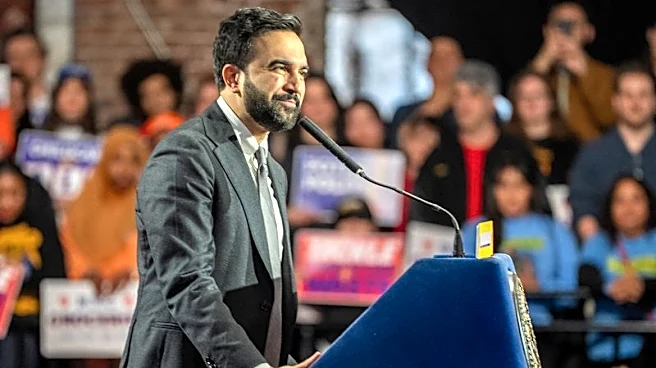
New York City Mayor Zohran Mamdani has announced a proposal for a new tax targeting luxury second homes valued over $5 million, whose owners do not reside in the city full-time. This initiative, known as the pied-à-terre tax, aims to generate significant
revenue for the city, estimated at $500 million annually. The funds are intended to support public services such as free childcare, street cleaning, and neighborhood safety. The proposal, which requires approval from the state legislature, is part of Mayor Mamdani's broader agenda to address economic disparities and ensure that wealthy property owners contribute more to the city's finances.
Why It's Important?
The proposed tax on luxury second homes in New York City represents a significant policy shift aimed at addressing economic inequality and funding essential city services. By targeting high-value properties owned by non-residents, the tax seeks to leverage the wealth of global elites who invest in New York real estate. This move could set a precedent for other cities grappling with similar issues of housing affordability and public service funding. The proposal also highlights the ongoing debate over taxation and wealth distribution, particularly in urban centers with high living costs.
What's Next?
The proposal's success hinges on gaining approval from the New York state legislature, which has historically been a challenging hurdle for similar initiatives. If passed, the tax could face legal challenges from property owners and real estate interests. Additionally, the policy's implementation will require careful coordination with state regulations to ensure compliance and effectiveness. The outcome of this legislative effort will be closely watched by policymakers and stakeholders across the country, as it could influence future tax policies targeting wealth and property ownership.