


What's Happening?
The United Kingdom is undertaking a significant restructuring of its Special Operations Forces (SOF) by re-roling and re-branding existing units to create new capabilities, such as the Ranger Regiment and a re-oriented Royal Marine Commando Force. This
initiative aims to rapidly increase the UK's SOF capacity despite a shrinking overall military budget. Historically, the UK's elite Special Air Service (SAS) and Special Boat Service (SBS) have been the primary special forces. However, with growing operational demands and budget constraints, the UK is now turning its focus inward to develop single-service Special Operations Forces (Ss-SOF) from conventional units. This move is distinct from the US model, where 'SF' refers to Green Beret capabilities, as in the UK, 'SF' denotes top-tier capabilities, while 'SOF' refers to special operations capable units that are not 'SF'.
Why It's Important?
This strategic shift by the UK has several implications for U.S. and NATO defense strategies. The creation of more special operations capable units, even if not top-tier 'SF,' provides increased flexibility and capacity for allied operations. The UK's commitment to spending 2.5% of GDP on defense by 2027, and potentially more by 2035, coupled with the rapid development of SOF, demonstrates a tangible contribution to NATO. This allows the UK to fulfill deterrence duties within NATO using these new SOF units, thereby freeing up its highly capable SAS and SBS for other critical national security threats. For the U.S., this means a potentially more robust and adaptable partner in joint operations, particularly in areas requiring specialized military responses, without over-relying on the most elite forces for broader engagements.
What's Next?
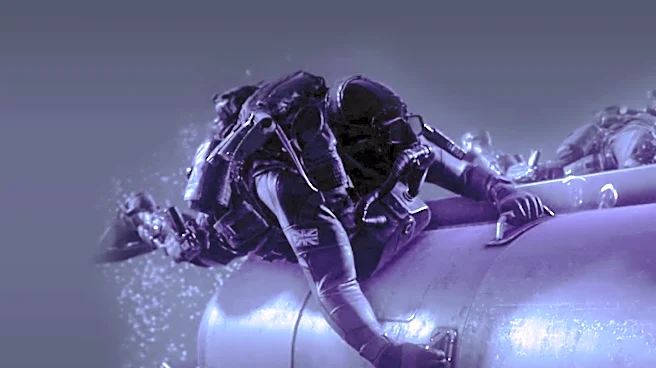
The UK's new SOF units, including the Ranger Regiment and the re-oriented Royal Marine Commandos, are expected to become operational and integrate into NATO roles. The Royal Marine Commandos have already been certified as capable for maritime operations within NATO's Special Operations force. This will likely lead to increased participation of these units in NATO exercises and deployments, showcasing their enhanced capabilities. However, challenges remain regarding supportability, as spreading talent across more units without a significant increase in overall manpower could thin out the expertise available for top-tier forces. The command and control structure for these new Ss-SOF units, which will remain under their single-service chiefs rather than the Director Special Forces, will also need to be effectively managed to ensure seamless integration and operational efficiency.
Beyond the Headlines
The deeper implications of the UK's SOF restructuring touch upon the evolving nature of modern warfare and defense spending. The decision to re-role existing units rather than create new ones from scratch highlights a pragmatic approach to resource allocation in an era of austerity. This strategy could serve as a model for other nations facing similar budgetary pressures while needing to maintain or expand specialized military capabilities. Furthermore, the distinction between 'SF' and 'SOF' in the UK context underscores a nuanced understanding of special operations, recognizing different tiers of capability and their respective roles. This could lead to broader discussions within NATO and among allies about optimizing special forces structures and ensuring interoperability across diverse operational definitions and capabilities.