
What's Happening?
India, the world's second-largest steel producer, is facing a significant challenge due to the European Union's new carbon border adjustment mechanism. This tariff, which took effect recently, imposes levies on imports based on the carbon emissions produced
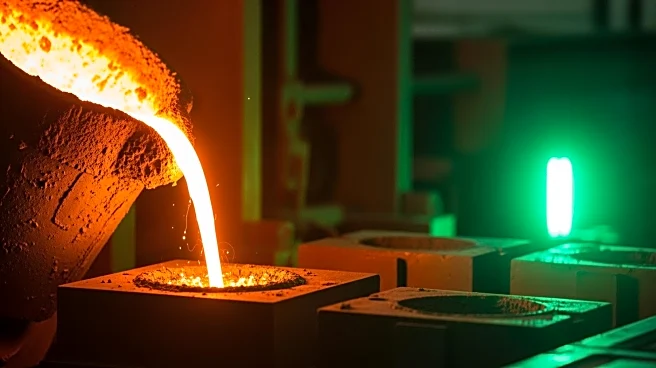
during their manufacturing. As a result, Indian steel, which heavily relies on coal, will be more expensive in the EU market. This development is seen as a wake-up call for India to transition towards greener steel production methods. Currently, a large portion of India's steel is produced using coal-fired blast furnaces, contributing significantly to carbon emissions. Although some Indian steelmakers are exploring cleaner production methods, such as direct reduced iron (DRI), these efforts are still largely dependent on coal.
Why It's Important?
The EU's carbon tariff represents a pivotal moment for India's steel industry, which exports a substantial portion of its output to Europe. The increased costs associated with the tariff could lead to a loss of market share to countries better prepared with green steel solutions, such as China. This situation underscores the urgency for India to adopt more sustainable steel production practices. The transition to green steel is not only crucial for maintaining competitiveness in the global market but also aligns with broader environmental goals. As India continues to expand its renewable energy capacity, including solar and wind power, the shift towards greener steel production could significantly reduce the country's carbon footprint.
What's Next?
India is likely to accelerate its efforts to reduce reliance on coal in steel production. This could involve increased investment in renewable energy sources and the development of infrastructure for cleaner steel production methods, such as hydrogen-based DRI. The Indian government may also implement policies to support this transition, potentially including incentives for green technology adoption. The response from Indian steelmakers will be critical, as they navigate the challenges of adapting to new production methods while maintaining economic viability. The outcome of these efforts will have significant implications for India's position in the global steel market and its environmental commitments.