



What's Happening?
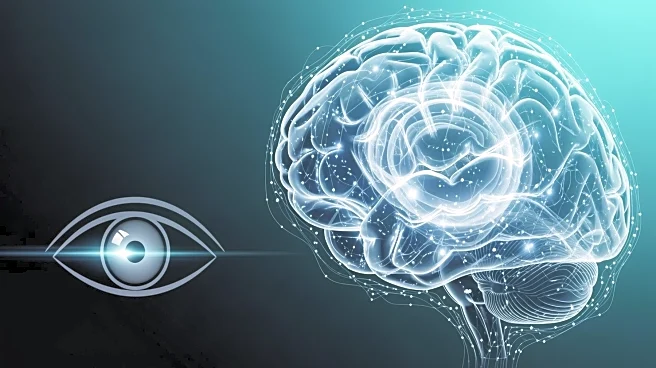
A study published in Science Advances explores how the brain maintains visual stability despite rapid eye movements known as saccades. Researchers used afterimages—ghostly shapes left after looking at bright lights—to understand how the brain predicts
visual consequences of eye movements. The study found that the brain uses an 'efference copy' of movement commands to anticipate where objects should appear, achieving high accuracy but with a consistent 6% undershoot. This systematic error, called hypometria, reveals the brain's internal mechanisms for visual prediction, ensuring stability even as the eyes move.
Why It's Important?
The research provides insights into the brain's ability to maintain visual stability, which is crucial for everyday activities and perception. Understanding these predictive mechanisms can inform developments in fields like robotics, virtual reality, and clinical studies of eye-movement disorders. The findings highlight the brain's sophisticated ability to anticipate sensory consequences, which could lead to improved designs for virtual environments and treatments for motion-related conditions. The study also offers a deeper understanding of how the brain compensates for natural eye movement errors, ensuring reliable perception.
Beyond the Headlines
The study's insights into visual prediction may have broader implications for technology and healthcare. In virtual reality, aligning visual feedback with the brain's natural expectations could reduce motion sickness and enhance user experience. Clinically, understanding the brain's predictive mechanisms could aid in diagnosing and treating eye-movement disorders, improving patient outcomes. The research also underscores the brain's adaptability, suggesting potential applications in artificial intelligence and machine learning, where predictive models can be refined based on biological principles.