
What's Happening?
Chicago Mayor Brandon Johnson has signed an executive order directing the city's police department to investigate alleged misconduct by federal immigration officers. This move is part of a broader effort to hold federal agents accountable for actions
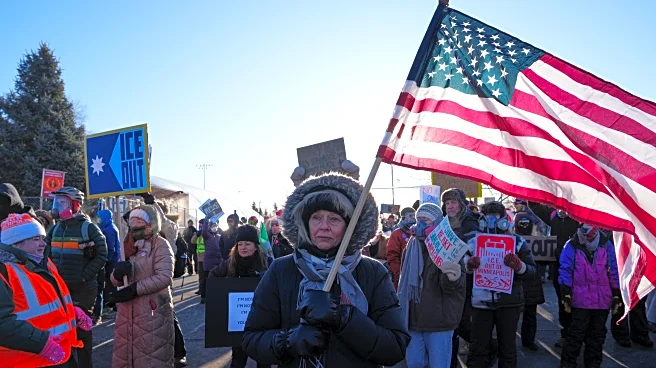
deemed unlawful by local authorities. The executive order, known as 'Ice On Notice,' aims to document federal enforcement actions, preserve body-camera footage, and identify supervisory officers involved in incidents. The order follows several controversial incidents involving federal agents, including the fatal shooting of Alex Pretti in Minneapolis and other cases in Chicago. The mayor's action is a response to President Trump's immigration enforcement policies, which have been criticized for their aggressive tactics.
Why It's Important?
The executive order represents a significant step in the ongoing tension between federal immigration enforcement and local governance. By taking this action, Chicago is setting a precedent for other cities that may seek to challenge federal authority in immigration matters. The move could lead to increased scrutiny of federal agents and potentially alter the dynamics of immigration enforcement in urban areas. It highlights the growing divide between progressive city leaders and federal policies under President Trump, emphasizing the need for accountability and transparency in law enforcement practices. This development could impact the relationship between local and federal agencies, particularly in sanctuary cities.
What's Next?
The Chicago Police Department is tasked with implementing the executive order within 30 days, which includes issuing guidance and procedures for documenting and investigating alleged misconduct. The order may prompt other cities to consider similar actions, potentially leading to a nationwide effort to hold federal agents accountable. The Department of Homeland Security has denied claims of misconduct, but the executive order could lead to legal challenges and further investigations. The situation may also influence legislative proposals, such as those in New York, aimed at limiting cooperation between local police and federal immigration agencies.