
What's Happening?
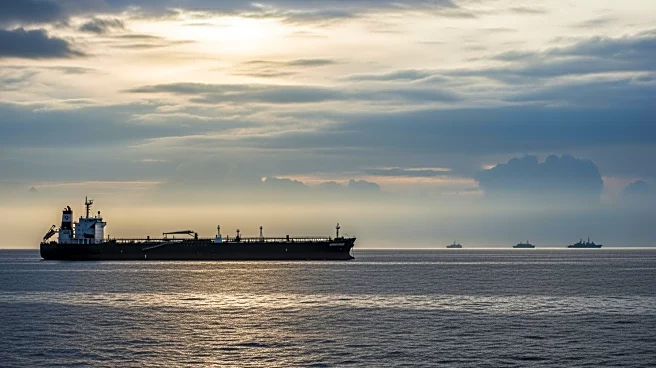
U.S. forces have intercepted an oil tanker off the coast of Venezuela, marking the second such incident in less than two weeks. This action is part of President Trump's intensified efforts to pressure
Venezuelan President Nicolás Maduro. The operation involved the U.S. Coast Guard and other military support, targeting a tanker last docked in Venezuela. Homeland Security Secretary Kristi Noem confirmed the operation, emphasizing the U.S.'s commitment to stopping the illicit movement of sanctioned oil, which is believed to fund narcoterrorism in the region. The tanker, operating under the name Centuries and flying the Panamanian flag, was stopped voluntarily, allowing U.S. forces to board. Venezuela's government has condemned the U.S. actions as criminal and vowed to pursue legal avenues, including complaints to the United Nations Security Council.
Why It's Important?
This development underscores the escalating tensions between the U.S. and Venezuela, particularly concerning oil sanctions and narcoterrorism. The U.S. aims to curb the flow of sanctioned oil, which it claims funds illegal activities, while also addressing past grievances over nationalized U.S. oil assets in Venezuela. The interception of tankers is part of a broader strategy by the Trump administration to exert pressure on Maduro, who faces accusations of narcoterrorism. The situation has significant implications for international relations and the global oil market, as it involves major geopolitical players and economic interests. The U.S.'s aggressive stance could lead to further diplomatic and economic repercussions, affecting stakeholders in the oil industry and international trade.
What's Next?
Venezuela has indicated it will seek legal recourse through international bodies, potentially escalating the diplomatic conflict. The U.S. may continue its blockade strategy, targeting more vessels linked to Venezuela. This could lead to increased military presence in the region and further strain U.S.-Venezuela relations. The international community, including the United Nations, may become more involved as Venezuela pursues its complaints. Additionally, the situation could influence global oil prices and trade dynamics, depending on the outcome of these actions and any potential retaliatory measures by Venezuela or its allies.