
What's Happening?
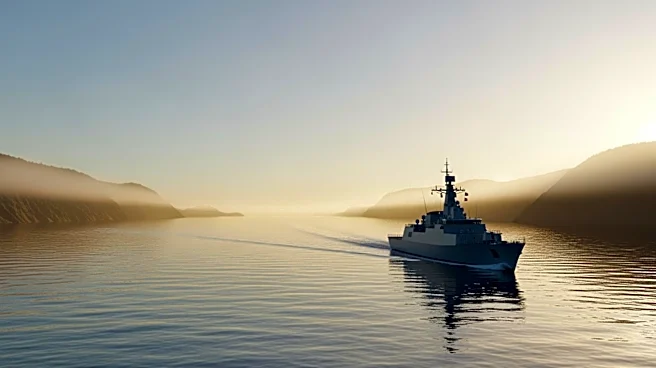
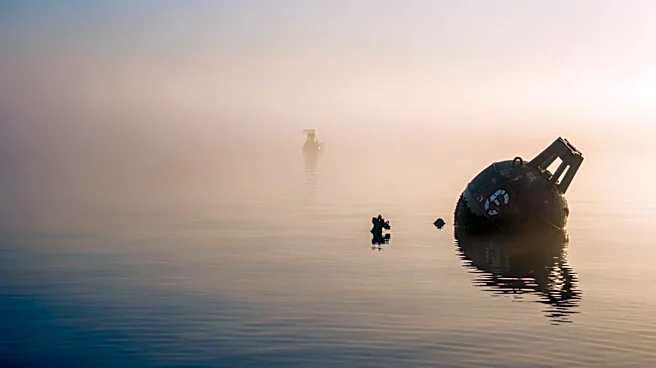
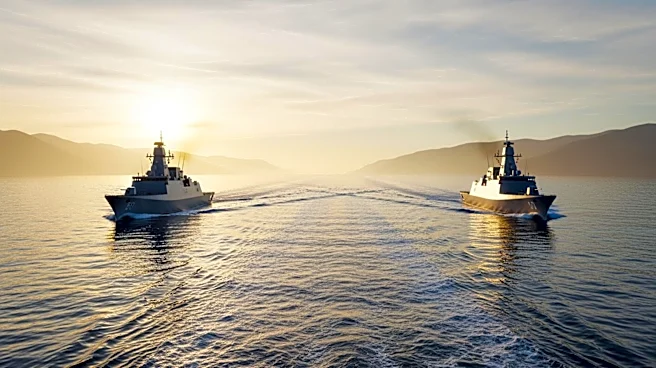
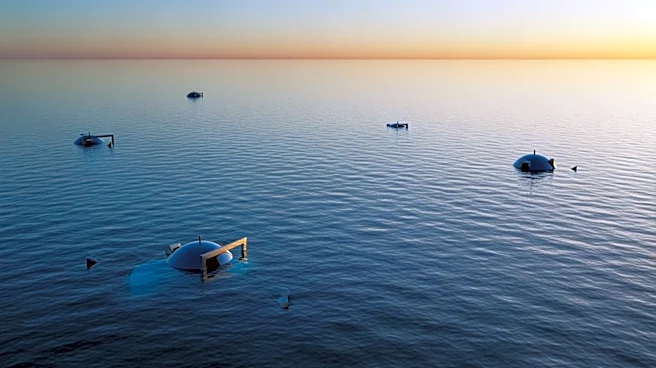
U.S. Central Command (CENTCOM) has commenced operations to clear mines in the Strait of Hormuz, a critical international sea passage. On April 11, two U.S. Navy guided-missile destroyers, USS Frank E.
Peterson and USS Michael Murphy, transited the strait and operated in the Arabian Gulf. This mission aims to remove sea mines laid by Iran’s Islamic Revolutionary Guards Corps, ensuring the strait remains open for global commerce. Admiral Brad Cooper, commander of CENTCOM, stated that the operation will establish a new safe passage for maritime industry, promoting the free flow of trade. Additional U.S. forces, including underwater drones, are expected to join the clearance efforts in the coming days.
Why It's Important?
The Strait of Hormuz is a vital trade corridor, crucial for regional and global economic prosperity. Clearing mines from this passage is essential to maintaining uninterrupted maritime trade, which impacts global oil prices and shipping routes. The operation underscores the U.S. commitment to safeguarding international waters and ensuring the security of global commerce. It also highlights ongoing tensions with Iran, which could affect diplomatic relations and regional stability. Successful clearance operations could bolster U.S. influence in the region and reassure allies of its capability to protect critical trade routes.
What's Next?
Following the initial clearance operations, CENTCOM plans to deploy additional resources, including underwater drones, to ensure comprehensive mine removal. The U.S. will likely continue diplomatic engagements with regional partners to secure cooperation and support for maintaining open sea lanes. Iran's response to these operations could influence future U.S. military and diplomatic strategies in the region. The international community will be closely monitoring the situation, as any escalation could impact global oil markets and regional security dynamics.