





What's Happening?
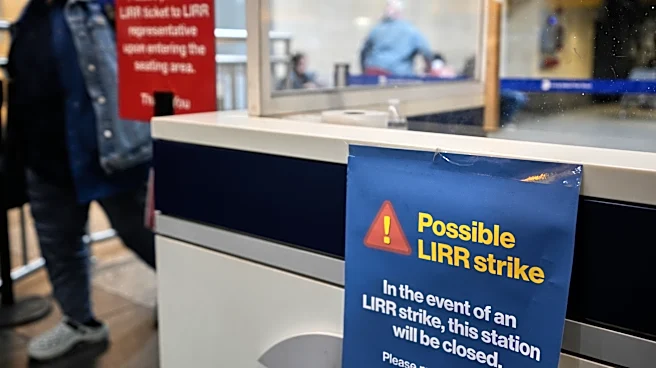
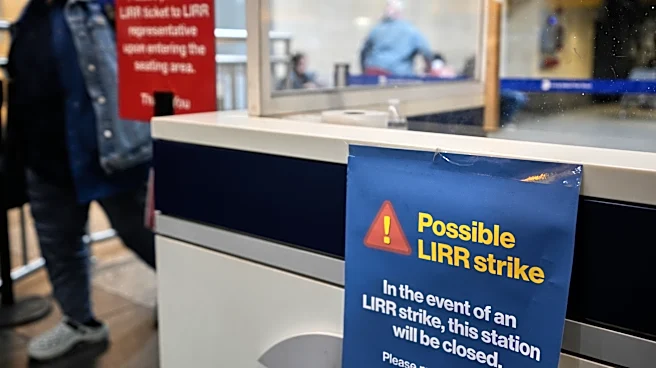
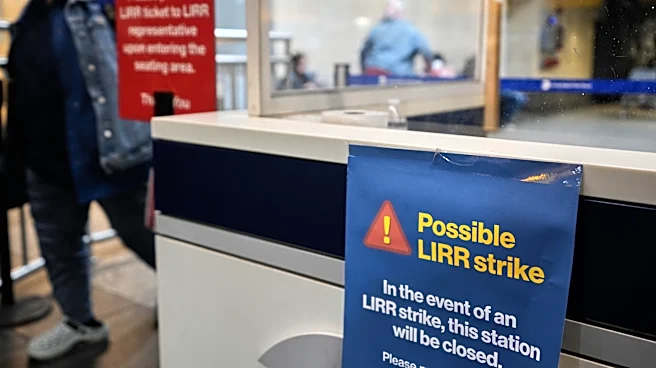
The Long Island Rail Road (LIRR) workers have initiated a strike, leading to a complete suspension of train services across Long Island. This action, which began early Saturday morning, involves over 3,500 union workers who are demanding fair contract
terms from the Metropolitan Transportation Authority (MTA). The strike has left more than 200,000 daily commuters without their usual transportation options. The workers, represented by multiple unions, are seeking better pay and healthcare provisions, particularly for new employees. Negotiations with the MTA broke down shortly before the strike deadline, with no further talks currently scheduled. The strike marks the first complete shutdown of LIRR services since 1994, significantly impacting travel plans for both daily commuters and weekend travelers.
Why It's Important?
The LIRR strike underscores significant labor tensions within the transportation sector, highlighting the challenges of balancing employee demands with budget constraints. The disruption affects a large number of commuters, potentially leading to increased traffic congestion and economic impacts on businesses reliant on the rail service. The strike also raises broader questions about labor rights and the sustainability of current employment terms in the face of rising living costs. The outcome of this strike could set a precedent for future labor negotiations within the transportation industry, influencing how similar disputes are handled across the country.
What's Next?
With no negotiations currently scheduled, the strike's duration remains uncertain, leaving commuters and businesses in a state of limbo. The MTA and union representatives may face increasing pressure from the public and government officials to reach a resolution. In the meantime, commuters are advised to seek alternative transportation methods, such as ride-sharing or shuttle services, which have been increased to accommodate the disruption. The ongoing strike may also prompt discussions about long-term solutions to prevent similar occurrences in the future, potentially involving policy changes or increased investment in transportation infrastructure.