


What's Happening?
A 7.5-magnitude earthquake struck off the northeast coast of Japan, prompting a tsunami warning and evacuation orders for coastal areas. The Japan Meteorological Agency reported that the earthquake's epicenter was in the Pacific Ocean, 20 kilometers deep.
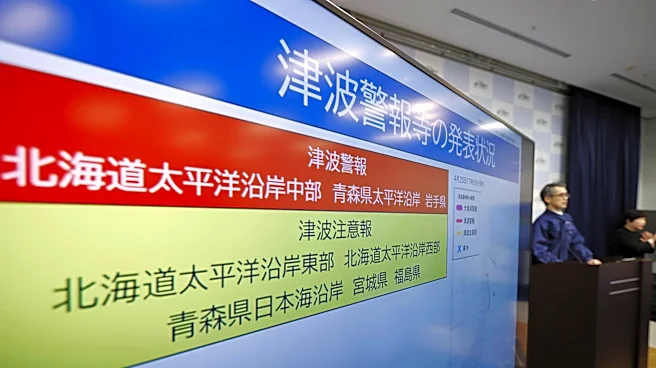
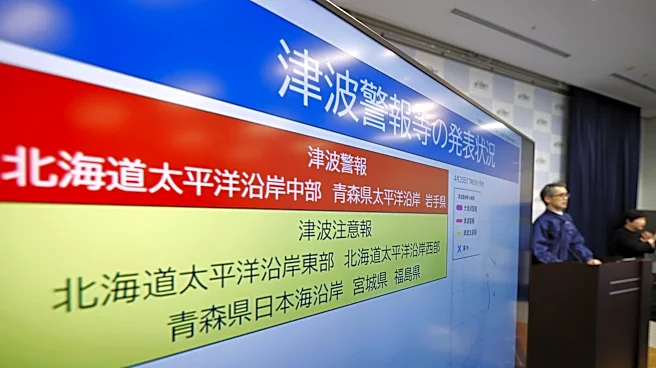
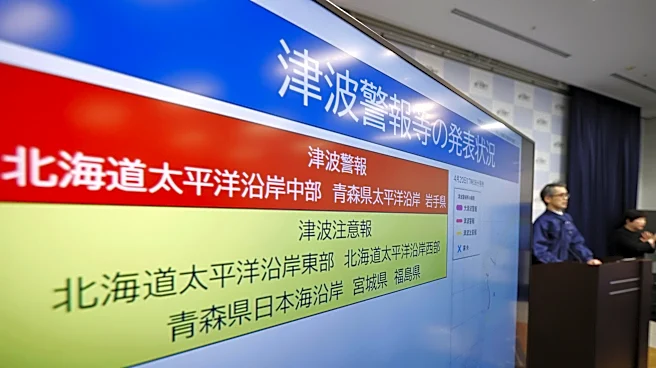
Tsunami waves of up to three meters were initially forecasted, leading to evacuation orders in several port towns, including Otsuchi and Kamaishi. These areas were previously affected by the 2011 earthquake and tsunami. The government set up an emergency task force, and bullet train services were halted as a precaution. Although the tsunami warning was later downgraded to an advisory, the government warned of a heightened risk of a megaquake in the coming week.
Why It's Important?
Japan is one of the most earthquake-prone countries, located in the 'Ring of Fire,' which accounts for about 20% of the world's earthquakes of magnitude 6.0 or more. The recent earthquake highlights the ongoing seismic risks faced by Japan, which can have significant implications for public safety and infrastructure. The potential for a megaquake poses a serious threat to densely populated areas and critical infrastructure, including transportation and energy facilities. The government's response and preparedness measures are crucial in mitigating the impact of such natural disasters on the population and economy.
What's Next?
Authorities are closely monitoring the situation for any further seismic activity. The government has advised residents to remain vigilant and take necessary precautions. The heightened risk of a megaquake in the coming week requires continued readiness and potential further evacuations. The response from local and national agencies will be critical in ensuring public safety and minimizing disruption. Additionally, the situation may prompt a review of Japan's disaster preparedness and response strategies to enhance resilience against future seismic events.