


What's Happening?
Pakistan has proposed hosting a second round of talks between the United States and Iran in Islamabad, according to Pakistani officials. This proposal comes as tensions between the U.S. and Iran continue to escalate, with the U.S. having recently blockaded
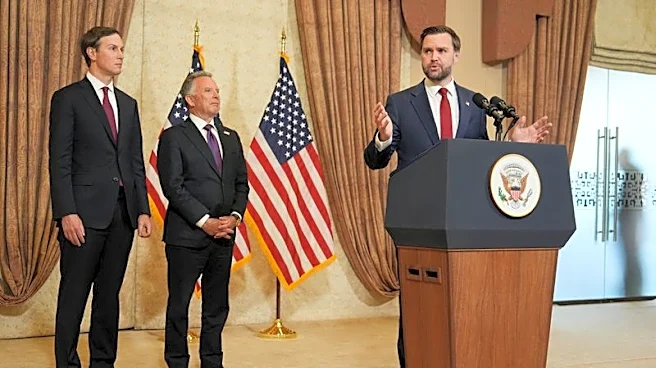
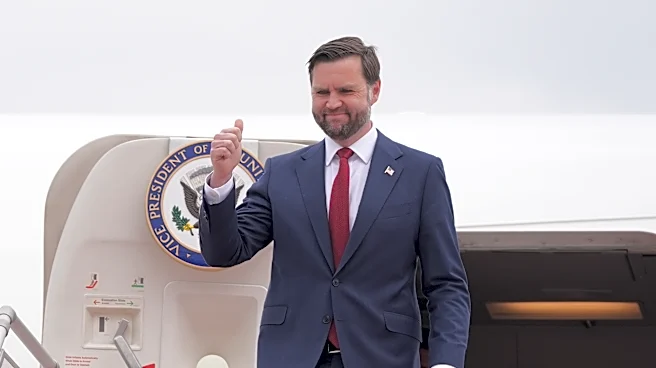
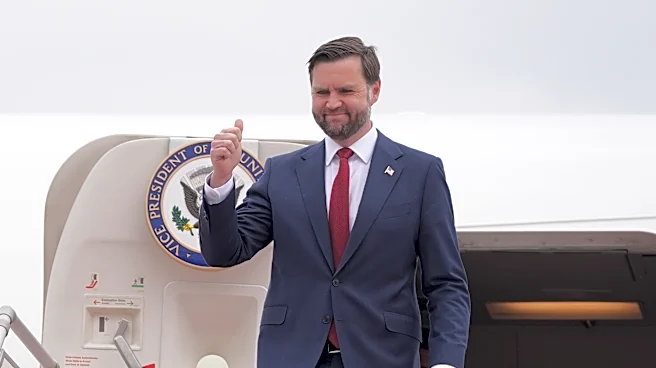
Iranian ports and Iran threatening regional strikes. The first round of talks, which ended without an agreement, was part of a broader diplomatic effort rather than a singular event. U.S. Vice President JD Vance noted some progress in the negotiations, while President Trump indicated that Iran is interested in reaching a deal. The talks are part of a larger context involving regional conflicts, including the Israel-Hezbollah war, and efforts by other nations, such as France and Britain, to ensure safe passage through the Strait of Hormuz.
Why It's Important?
The proposed talks are significant as they represent a potential de-escalation of tensions between the U.S. and Iran, which have implications for global security and economic stability. The Strait of Hormuz, a critical transit point for global energy supplies, remains a focal point of these discussions. Successful negotiations could lead to the reopening of this vital waterway, impacting global oil prices and energy markets. Additionally, the talks could influence U.S. foreign policy and its relations with Middle Eastern countries, potentially affecting international alliances and regional power dynamics.
What's Next?
If the talks proceed, they could pave the way for a broader diplomatic resolution to the U.S.-Iran standoff. The outcome of these discussions may influence future U.S. sanctions on Iran and the country's nuclear program. Key stakeholders, including European nations and regional powers, will likely monitor the situation closely, as their interests in regional stability and energy security are directly affected. The international community may also play a role in facilitating or mediating future negotiations.