





What's Happening?
U.S. Representative Ayanna Pressley has officially endorsed State Representative Tram Nguyen in the 6th Congressional District Democratic primary. This endorsement follows Mariah Lancaster's decision to withdraw from the race and also back Nguyen, consolidating
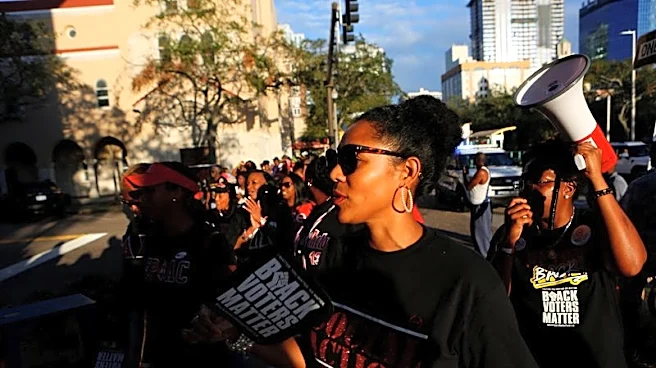
progressive support. Pressley publicly stated that she does not offer endorsements lightly, emphasizing that Nguyen earned her support through her governance and ability to build trust. Pressley highlighted Nguyen's background as a political refugee from a working-class family and her commitment to progressive values, including the belief that every child deserves a future. The endorsement was made at a rally on Salem Common, where other prominent Democrats, including U.S. Representative Lori Trahan and Attorney General Andrea Campbell, also spoke in support of Nguyen. This rally served as a significant event in the final days leading up to the primary election, aiming to galvanize voters behind Nguyen's campaign.
Why It's Important?
This endorsement from a high-profile progressive like Representative Ayanna Pressley carries significant weight, particularly in a Democratic primary where progressive bona fides are often a key differentiator. Pressley's backing, coupled with the support from other influential figures and the withdrawal of a rival candidate, signals a concerted effort to unify the progressive wing of the Democratic Party behind Nguyen. This consolidation of support could provide a crucial boost to Nguyen's campaign, potentially swaying undecided voters and increasing turnout among progressive constituents. The emphasis on Nguyen's working-class background and commitment to issues like affordable groceries, gas prices, and housing costs resonates with a broad base of voters concerned about economic stability. Furthermore, the involvement of an outside political committee spending substantial funds to support Nguyen, while not coordinated with her campaign, underscores the high stakes and competitive nature of this congressional race. The outcome will indicate the strength of progressive unity and the effectiveness of high-profile endorsements in shaping primary election results.
What's Next?
With the primary election approaching, the immediate focus will be on voter turnout and the impact of these late-stage endorsements and campaign activities. Nguyen's campaign, bolstered by Pressley's support and the consolidation of progressive votes, will likely intensify its efforts to reach voters in the final days. The significant independent expenditures by outside groups, while not directly controlled by Nguyen's campaign, will continue to amplify her message and name recognition. The election results will reveal whether the strategy of unifying progressive support and emphasizing a candidate's commitment to progressive values can overcome other factors, such as the financial resources of other candidates. The performance of candidates like Nguyen in this primary will also be closely watched as an indicator of broader trends within the Democratic Party regarding generational change versus established experience, and the influence of progressive endorsements in competitive races.
Beyond the Headlines
The dynamics of this race, particularly the role of endorsements and external spending, highlight deeper trends in contemporary U.S. politics. The emphasis on a candidate's personal narrative, such as Nguyen's background as a political refugee, speaks to a growing desire among voters for authentic representation and leaders who understand diverse lived experiences. The debate over 'generational change' versus 'institutional muscle' within the Democratic Party is also a recurring theme, with younger, progressive candidates often challenging long-serving incumbents or establishment-backed figures. The substantial independent expenditures by PACs, even without direct coordination with campaigns, raise questions about transparency and the influence of money in elections. This race serves as a microcosm of the broader struggle within the Democratic Party to define its future direction, balance progressive ideals with electability, and navigate the complex landscape of campaign finance and political messaging.