
What's Happening?
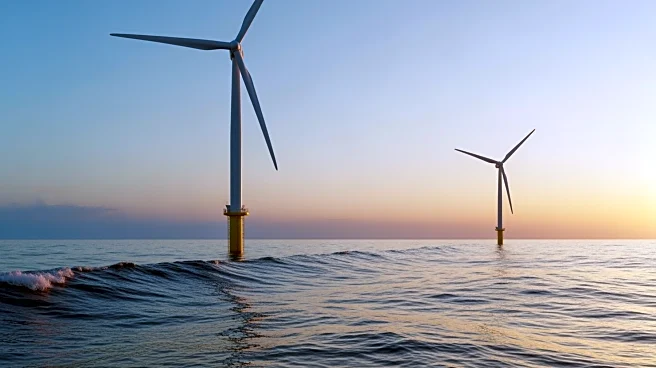
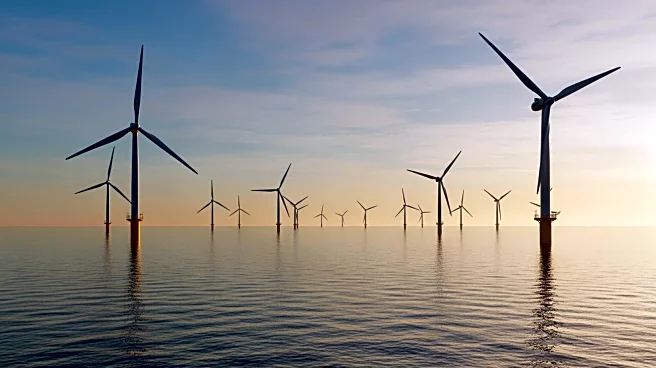
Vattenfall, an offshore wind energy developer, has confirmed its decision to proceed with the Nordlicht offshore wind cluster, set to become Germany's largest wind project. The project, located in the North
Sea, will be constructed in two phases, with the first phase expected to begin monopile installation in the third quarter of this year. The Nordlicht I phase will have a capacity of 980 MW, while the second phase, Nordlicht II, will add an additional 630 MW. The entire project is anticipated to be operational by 2028, contributing over 1.6 GW to Germany's energy supply. This development comes as Germany faces challenges in meeting its offshore wind energy targets, having been stuck at around 1,600 installed wind turbines since late 2024. The project is seen as a significant step in reducing reliance on fossil fuels and strengthening Europe's energy resilience.
Why It's Important?
The advancement of the Nordlicht offshore wind project is crucial for Germany's energy strategy, as the country aims to increase its offshore wind capacity to 30 GW by 2030. This project not only supports Germany's renewable energy goals but also enhances energy security by reducing dependence on fossil fuels. The involvement of BASF, which has secured a long-term renewable electricity supply from the project, highlights the growing demand for clean energy in industrial sectors. The project's success could serve as a model for other European countries facing similar challenges in expanding their renewable energy infrastructure. Additionally, it underscores the importance of strategic partnerships and government support in overcoming economic pressures and fostering sustainable energy development.
What's Next?
With the permit from the Federal Maritime and Hydrographic Agency now irrevocable, Vattenfall is set to begin construction of the Nordlicht I phase later this year. The company will focus on completing the first phase by 2028, followed by the second phase, Nordlicht II, which is scheduled to start in 2027. The German government may need to reassess its offshore wind auction strategies to attract more interest and investment in future projects. As the project progresses, stakeholders will likely monitor its impact on Germany's energy landscape and its potential to inspire similar initiatives across Europe.