






What's Happening?
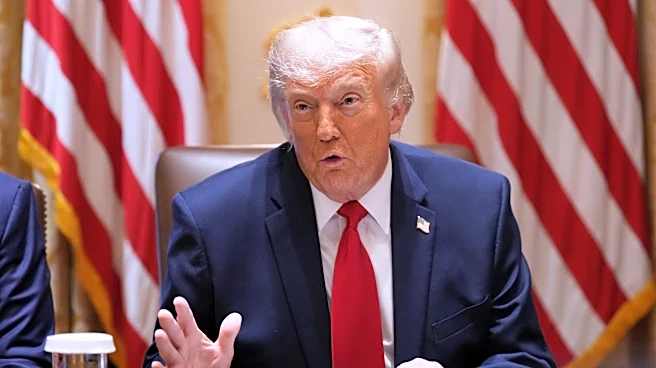
President Donald Trump has expressed his desire for additional Arab countries, including Saudi Arabia and Qatar, to join the Abraham Accords as part of a broader deal with Iran. During a Cabinet meeting at the White House, Trump emphasized the importance
of these countries joining the accords, which aim to normalize relations between Israel and Arab nations. He highlighted the participation of the United Arab Emirates as a positive example and suggested that the inclusion of more countries would be historic. Trump also indicated that the U.S. might reconsider its position on the Iran deal if these countries do not join the accords.
Why It's Important?
The Abraham Accords represent a significant shift in Middle Eastern geopolitics, fostering cooperation between Israel and several Arab nations. By pushing for Saudi Arabia and Qatar to join, President Trump is attempting to expand this diplomatic framework, potentially stabilizing the region and countering Iranian influence. The inclusion of these countries could lead to increased economic and security cooperation, benefiting U.S. interests in the region. However, the conditional nature of the Iran deal on their participation adds pressure and could complicate diplomatic negotiations.
What's Next?
If Saudi Arabia and Qatar agree to join the Abraham Accords, it could pave the way for a more comprehensive peace agreement in the Middle East. However, their decision will likely depend on various geopolitical factors, including their relations with Iran and domestic considerations. The U.S. may need to engage in further diplomatic efforts to persuade these nations, potentially offering incentives or addressing their security concerns. The outcome of these negotiations will significantly impact the future of U.S.-Iran relations and the broader Middle Eastern diplomatic landscape.