








What's Happening?
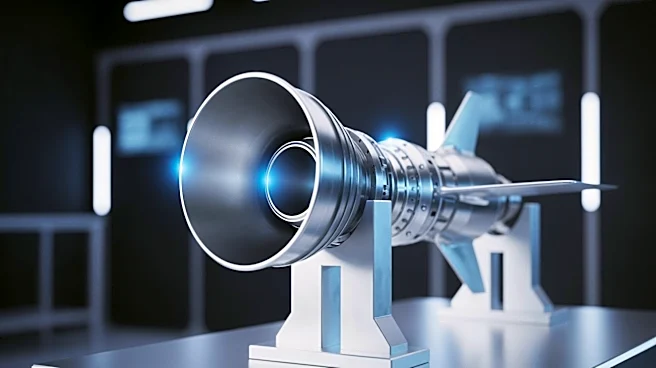
Astrobotic Technology has successfully tested a new rocket engine, the Chakram rotating detonation rocket engine (RDRE), at NASA's Marshall Space Flight Center. The engine, designed for cislunar and logistics missions, achieved a continuous burn of 300
seconds, demonstrating its potential to cut costs and increase capacity for future space missions. The RDRE generates thrust through supersonic detonation waves, which could improve engine efficiency by up to 15% while reducing size. Astrobotic plans to integrate this technology into its Griffin lander and other spacecraft, supporting NASA's Commercial Lunar Payload Services (CLPS) program.
Why It's Important?
The successful test of the Chakram RDRE represents a significant advancement in rocket propulsion technology, with implications for future lunar and deep space missions. By improving engine efficiency and reducing size, Astrobotic's technology could lower the cost of space exploration and increase payload capacity. This innovation supports NASA's goals for the Artemis program and the establishment of a sustainable human presence on the moon. The development of more efficient propulsion systems is crucial for enabling long-duration missions and expanding human exploration beyond low Earth orbit.
What's Next?
Astrobotic plans to continue testing and refining the Chakram RDRE, with the goal of integrating it into future lunar missions. The company is preparing for its Griffin Mission-1, which will carry payloads to the moon, including a rover and scientific instruments. As part of NASA's CLPS program, Astrobotic aims to support the Artemis program by delivering critical infrastructure and technology to the lunar surface. The continued development of advanced propulsion systems will be essential for achieving NASA's long-term exploration goals and expanding human presence in space.