







What's Happening?
As companies enforce return-to-office (RTO) mandates, introverts are finding ways to adapt to the bustling office environment. During the pandemic, remote work allowed introverts to thrive in quieter settings, but the shift back to in-person work has
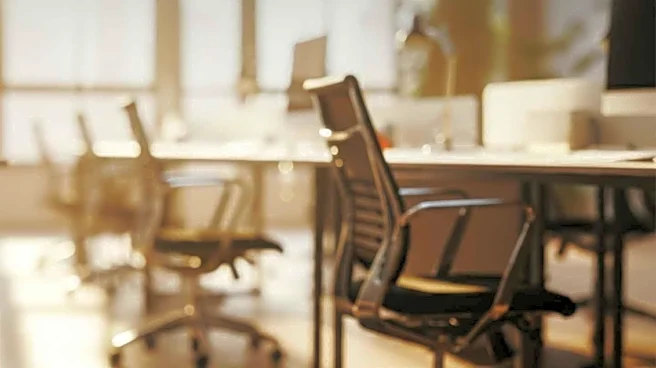
posed challenges. Introverts, who make up a significant portion of the workforce, often prefer lower levels of external stimulation and need time alone to recharge. To cope, many are seeking out quiet spaces within offices, such as empty conference rooms or outdoor benches, to find moments of solitude. Companies are responding by redesigning office spaces to accommodate different working styles, including quiet focus rooms and flexible work areas. These changes aim to create environments that support productivity by allowing employees to control noise and stimulation levels.
Why It's Important?
The adaptation of office spaces to better suit introverts highlights a broader shift in workplace design and culture. As companies strive to balance the needs of diverse employees, the focus on creating inclusive environments can lead to increased productivity and job satisfaction. By acknowledging the unique needs of introverts, businesses can foster a more supportive atmosphere that encourages collaboration while respecting individual preferences. This shift also reflects a growing recognition of the importance of mental health and well-being in the workplace, as employees seek environments that allow them to thrive both personally and professionally.