
What's Happening?
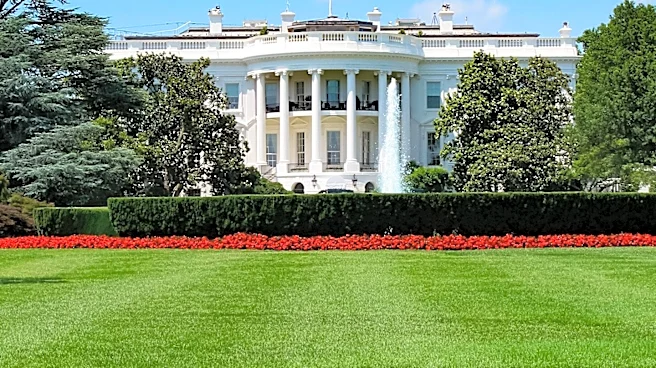
Officials with the Center for Advancing Innovation and Standards for Super Intelligence (CAISSI), an independent division of the Commerce Department, have reportedly been asked to informally report to an office
of the White House. This development, according to two former government officials, has sparked concerns among critics who fear the executive branch might be politicizing decisions related to AI safety. CAISSI, which lacks a permanent leader and has stopped publishing its research, is tasked with assessing the safety of new AI offerings. The center's annual budget of $10 million is significantly less than its UK counterpart. The White House, in response, stated that President Trump has formally established his new Super Intelligence Force and will ensure continued U.S. leadership in AI. This shift comes amidst growing public anxiety over reports of out-of-control artificial intelligence agents and a lack of standardized processes for testing AI agent safety.
Why It's Important?
This shift in reporting structure for CAISSI is significant because it raises questions about the independence and objectivity of AI safety assessments in the U.S. Critics worry that politicizing these decisions could compromise findings related to cybersecurity, bioweapons, and other critical areas, potentially deferring to the tech industry's interests rather than public safety. The lack of a permanent leader and the cessation of public research further exacerbate these concerns, hindering transparency and accountability. While some argue that closer White House ties could increase the division's prominence and funding, the potential for altered or muted findings could undermine public trust and effective regulation of rapidly advancing AI technologies. The current approach, where AI companies are largely entrusted to self-police, contrasts sharply with other regulated industries like automobiles, where government bodies actively set and enforce safety standards.
What's Next?
The future of AI safety regulation in the U.S. remains uncertain. The White House has indicated President Trump's commitment to U.S. leadership in AI through his Super Intelligence Force and a commissioned report on risks from his Council of Advisors on Science and Technology. However, the administration has not detailed how it will monitor the implementation of the voluntary safety pact signed by leading AI companies. The ongoing debate will likely center on the balance between fostering innovation and ensuring robust, independent oversight of AI development. Stakeholders, including civil society groups, tech companies, and lawmakers, will continue to push for clarity on the government's role in AI safety testing and the establishment of clear, enforceable standards to mitigate potential risks.
Beyond the Headlines
The underlying tension in this situation lies in the fundamental question of who should govern the development and deployment of powerful AI technologies. The move to bring CAISSI closer to the White House, coupled with the administration's emphasis on national security and industry self-policing, suggests a potential shift towards executive discretion and secrecy over public transparency and independent oversight. This approach could have long-term implications for consumer protection, privacy, and civil rights, as decisions around AI safety might be framed primarily through a national security lens. The lack of a standardized process for evaluating AI agents, especially as they become more autonomous, highlights a critical gap in regulatory frameworks, potentially leading to unforeseen real-world harms and ethical dilemmas as AI systems increasingly operate without direct human prompting.