







What's Happening?
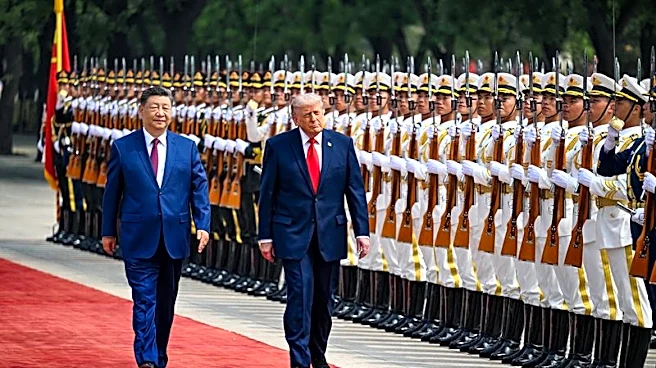
During a recent summit in Beijing, Chinese leader Xi Jinping referenced the Thucydides Trap in discussions with President Trump. This concept, derived from the Peloponnesian War between Athens and Sparta, suggests that when a rising power threatens to
displace an established one, war often ensues. Xi's mention of this historical analogy was seen as a commentary on the current dynamics between China and the United States, particularly concerning Taiwan. Xi warned that any missteps regarding Taiwan could lead to conflict, emphasizing the island's significance in China-US relations. Despite these tensions, Xi expressed optimism that both nations could manage their rivalry pragmatically, focusing on mutual benefits rather than conflict.
Why It's Important?
The invocation of the Thucydides Trap by Xi Jinping underscores the precarious nature of China-US relations, especially in the context of Taiwan. As China continues to rise as a global power, the United States faces strategic challenges in maintaining its influence. The potential for conflict over Taiwan could have significant implications for international stability, affecting global trade, security, and diplomatic relations. Both countries have substantial economic and political stakes in avoiding direct confrontation, making the management of this relationship crucial for global peace and prosperity.
What's Next?
The future of China-US relations will likely hinge on how both nations navigate the Taiwan issue. Diplomatic efforts and strategic negotiations will be essential in preventing escalation. The international community will be closely monitoring developments, as any conflict could have widespread repercussions. Both leaders have expressed a desire to strengthen ties, suggesting that future dialogues may focus on finding common ground and reducing tensions.
Beyond the Headlines
The reference to the Thucydides Trap also highlights broader themes of power transition and the challenges of maintaining global order. As China continues to assert its influence, the United States must adapt to a changing geopolitical landscape. This situation raises questions about the sustainability of current international systems and the potential need for new paradigms in major-power relations.