


What's Happening?
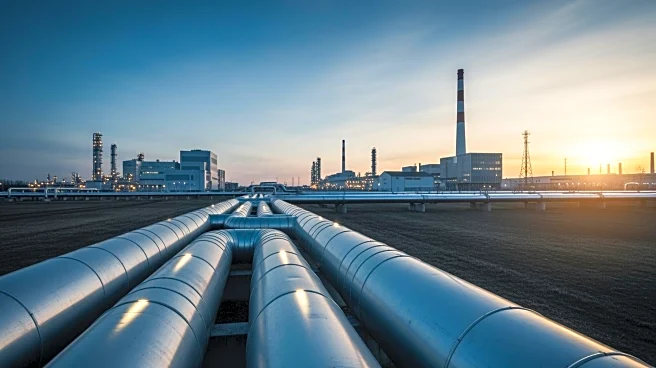
China has developed a 1,000 km industrial hydrogen pipeline that connects renewable-rich regions in northern and western China to coastal industrial clusters. This infrastructure is designed to support existing hydrogen demand in industries such as refining,
ammonia, methanol, and chemical production. Unlike Germany's hydrogen backbone, which lacks binding offtake contracts and is criticized for its speculative nature, China's pipeline is grounded in real supply conditions. The Chinese pipeline is proportionate to the country's vast geography and industrial needs, contrasting with Germany's oversized infrastructure relative to its actual hydrogen demand.
Why It's Important?
The development of China's hydrogen pipeline underscores the country's strategic approach to industrial infrastructure, focusing on existing demand and realistic supply conditions. This contrasts with Germany's speculative hydrogen backbone, which has faced criticism for its lack of demand anchoring and oversized capacity. China's approach highlights the importance of aligning infrastructure projects with actual industrial needs, reducing the risk of underutilization and economic inefficiency. This development could influence global perspectives on hydrogen infrastructure, emphasizing the need for demand-driven projects.