


What's Happening?
A former instructor for U.S. Immigration and Customs Enforcement (ICE), Ryan Schwank, has accused the agency of significantly reducing training standards for new officers and misleading Congress about these changes. Schwank, who recently resigned from
an ICE academy in Georgia, testified before congressional Democrats, revealing that the agency cut 240 hours of essential training from a mandatory 580-hour program. The eliminated courses included critical instruction on the legal use of force, firearm handling, and proper arrest procedures. Schwank provided internal ICE documents to support his claims, showing that the training program was shortened from 72 days to 42 days. This reduction comes as the Trump administration seeks to expand its deportation operations. The Department of Homeland Security, which oversees ICE, has denied any reduction in training hours, stating that recruits receive the same total hours of training as before, albeit in a condensed schedule.
Why It's Important?
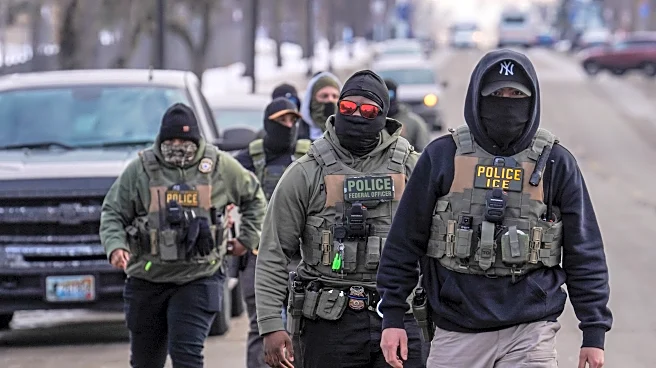
The allegations of reduced training standards for ICE officers have significant implications for public safety and the agency's operational integrity. Proper training is crucial for law enforcement officers to perform their duties within legal boundaries and ensure public safety. The reduction in training hours, particularly in areas like the use of force and constitutional rights, raises concerns about potential misconduct and violations of civil liberties. This issue is particularly pressing given the recent incidents involving ICE officers, including the fatal shooting of two U.S. citizens by federal officers. The controversy also highlights the tension between the need for rapid expansion of immigration enforcement and the necessity of maintaining rigorous training standards. The situation could impact public trust in ICE and the broader immigration enforcement system.
What's Next?
The testimony and documents provided by Schwank may prompt further investigations by Congress into ICE's training practices and the agency's transparency with lawmakers. There could be increased scrutiny on the Department of Homeland Security and calls for accountability, potentially leading to policy changes or leadership shifts within the agency. The situation may also influence public opinion and political discourse around immigration enforcement and the balance between security and civil rights. Lawmakers may push for legislative measures to ensure adequate training and oversight of ICE operations.