



What's Happening?
The Atlantic is organizing an event in Santa Fe, New Mexico, on January 28, 2026, featuring a conversation with staff writer Ross Andersen. The event will take place at the Museum of Indian Arts and Culture following a tour of the 'Makowa: The Worlds
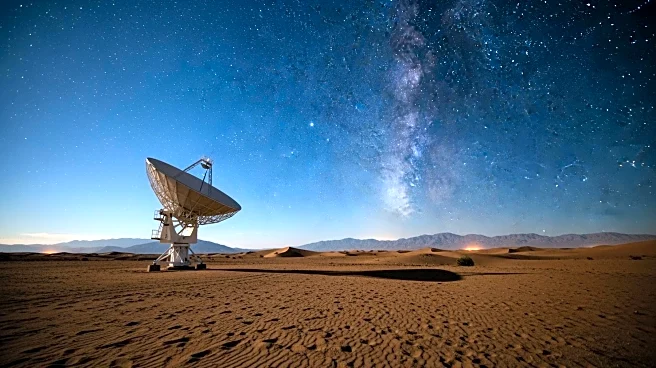
Above Us' exhibit. The discussion, moderated by Atlantic staff writer Caity Weaver, will delve into New Mexico's historical and cultural relationship with the cosmos. The state has a rich tradition of using both modern radio telescopes and ancient stone observatories to explore the skies. The conversation aims to explore humanity's evolving relationship with the universe and the ongoing search for extraterrestrial life.
Why It's Important?
This event highlights New Mexico's unique position in the field of astronomy and space exploration. The state's long-standing tradition of sky observation, combined with its modern scientific facilities, makes it a significant player in the search for extraterrestrial life. The discussion is likely to attract interest from both the scientific community and the general public, fostering a deeper understanding of humanity's place in the universe. It also underscores the importance of cultural and historical perspectives in scientific exploration, potentially influencing future research directions and public engagement with space science.
What's Next?
The event may lead to increased public interest and participation in astronomical activities in New Mexico. It could also inspire further collaborations between cultural institutions and scientific organizations, promoting interdisciplinary approaches to space exploration. The insights shared during the discussion might influence future research priorities and public policy related to space science and extraterrestrial exploration.
Beyond the Headlines
The event reflects broader cultural and philosophical questions about humanity's place in the universe. It highlights the intersection of science and culture, emphasizing the role of historical and indigenous perspectives in contemporary scientific discourse. This approach could lead to more inclusive and diverse narratives in the field of astronomy, enriching our understanding of the cosmos and our quest for knowledge beyond Earth.