








What's Happening?
The U.S. military has intensified its operations against drug cartels, conducting strikes on vessels in the Caribbean and Eastern Pacific. These actions are part of a broader strategy initiated by President Trump, who designated drug cartels as foreign
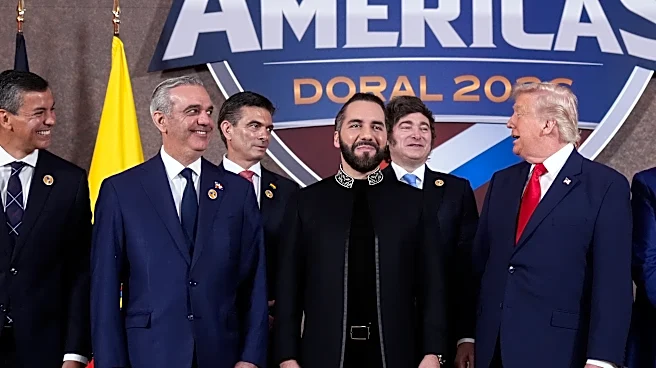
terrorist organizations. This designation has allowed for more aggressive military interventions aimed at disrupting drug trafficking routes. Despite these efforts, the effectiveness of such military actions is debated, as the primary source of fentanyl, a major drug concern, is Mexico, not the Caribbean. The Trump administration has also launched the 'Shield of the Americas' initiative, a multinational coalition focused on military solutions to combat drug cartels, although key countries like Mexico and Colombia are not part of this coalition.
Why It's Important?
The U.S. military's aggressive stance against drug cartels highlights a significant shift in how the U.S. addresses drug trafficking. By treating cartels as terrorist organizations, the U.S. can employ military force, which may deter some cartel activities. However, this approach has been criticized for not addressing the root causes of drug trafficking, such as corruption and economic instability in source countries. The focus on military solutions may also strain diplomatic relations with countries not included in the 'Shield of the Americas' initiative. Additionally, the militarization of drug policy could lead to unintended consequences, such as increased violence and fragmentation of cartels, complicating efforts to control drug trafficking.
What's Next?
The continuation of military strikes suggests a sustained U.S. commitment to using force against drug cartels. However, the effectiveness of this strategy will likely be evaluated based on its impact on drug trafficking rates and regional stability. The U.S. may face pressure to incorporate more comprehensive strategies that address corruption and economic factors contributing to drug trafficking. The absence of key regional players in the 'Shield of the Americas' initiative may prompt diplomatic efforts to expand the coalition or adjust its strategies to include non-military solutions.
Beyond the Headlines
The U.S. strategy of militarizing the fight against drug cartels raises ethical and legal questions about the use of military force in foreign territories. It also highlights the complex relationship between drug trafficking and corruption, suggesting that without addressing systemic corruption, military efforts may have limited success. The focus on military solutions may overshadow the need for international cooperation and comprehensive policies that address the socio-economic factors driving drug trafficking.