





What's Happening?
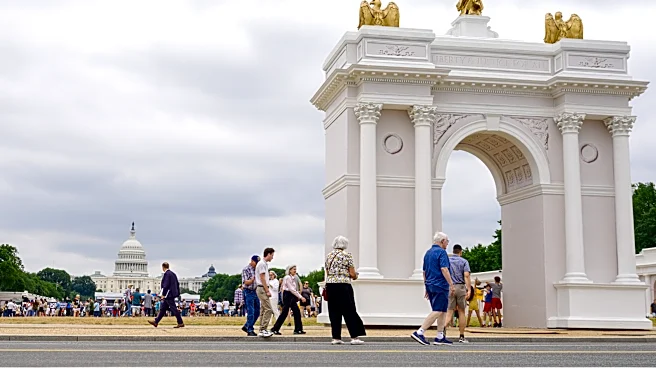
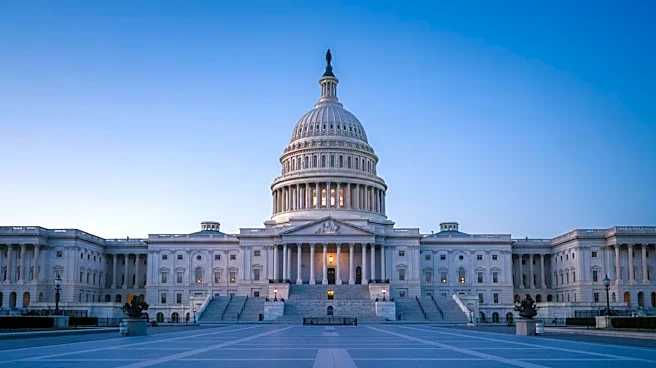
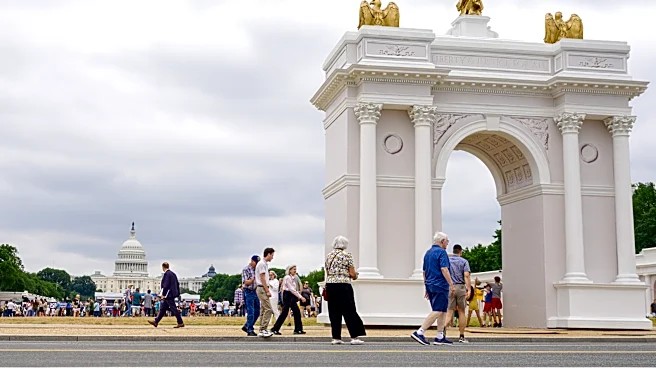
President Trump has increased the National Guard presence in Washington, D.C., to over 5,000 troops as part of a broader initiative to address crime and beautify the city. This move, part of the 'Safe and Beautiful' mission, coincides with the nation's
250th-anniversary celebrations. Despite the deployment, violent crime rates in D.C. were at 30-year lows when the National Guard was first deployed. The initiative has faced criticism for its unclear objectives and limited impact on crime reduction. The National Guard's presence has been controversial, with concerns about privacy and civil liberties due to the use of advanced data-collection tools.
Why It's Important?
The deployment of the National Guard in D.C. has significant implications for public policy and civil liberties. While intended to reduce crime and improve the city's appearance, the initiative has raised concerns about the militarization of law enforcement and the potential for abuse of power. The presence of troops has sparked fear among residents, with some viewing it as a test case for broader deployment across the country. The initiative's effectiveness is debated, as it has not significantly impacted violent crime rates, which were already declining. The situation highlights tensions between federal and local authorities and raises questions about the appropriate use of military forces in civilian areas.
What's Next?
The future of the National Guard's presence in D.C. remains uncertain. Some states have begun withdrawing their troops, citing concerns about the mission's scope and effectiveness. The administration may face increased scrutiny from lawmakers and civil rights groups, who are likely to demand transparency and accountability. The ongoing debate over the use of military forces in civilian contexts could lead to policy changes and legal challenges. As the situation develops, stakeholders will need to balance security concerns with the protection of civil liberties and public trust.